The Health Devices That Help Women Track What Matters in Midlife: A Guide to CaptureCare's Withings Range

The Health Devices That Help Women Track What Matters in Midlife: A Guide to CaptureCare's Withings Range
You've had the blood test. The results came back normal. But something still doesn't feel right.
This is one of the most common things midlife women describe. Not a dramatic diagnosis, not a crisis. Just a quiet, persistent sense that their body is shifting in ways that standard appointments aren't quite capturing.
The truth is, health in midlife is rarely a single-moment story. It's a pattern. A gradual accumulation of changes in cardiovascular function, body composition, sleep quality, and stress response that unfold over months, not in a single afternoon in a GP's waiting room.
That's where health monitoring devices for women are starting to make a real difference. The right device, used consistently, can surface information that matters: not just your weight, but your body composition. Not just your pulse, but your heart rhythm. Not just whether you slept, but how well.
But data alone only takes you so far. What changes everything is having a dedicated nurse who knows your history help you make sense of what you're seeing over time.
What's Actually Changing in Midlife Bodies
The years between 40 and 60 bring genuine physiological change. Oestrogen and progesterone levels fluctuate significantly during perimenopause and menopause, and these hormones don't only affect reproductive health. They influence bone density, cardiovascular function, weight distribution, mood regulation, and sleep quality.
According to Jean Hailes for Women's Health, women's risk of cardiovascular disease rises after menopause, partly due to the loss of oestrogen's protective effect on the heart and blood vessels. This is not a distant concern. It's a measurable shift that can begin years before a woman has any obvious symptoms.
Visceral fat, the type that accumulates around internal organs rather than under the skin, also tends to increase during this life stage. This matters because visceral fat is more metabolically active than subcutaneous fat, meaning it has a stronger association with insulin resistance, inflammation, and cardiovascular risk. Standard scales don't distinguish between the two.
Meanwhile, blood pressure can creep upward, sleep becomes more disrupted, and many women begin to notice that their body responds differently to stress. These are not imagined changes. They are real, and they are trackable with the right tools.
Why a snapshot isn't enough
A single measurement at a clinic visit tells you very little. Your blood pressure at 9am in a GP's office, influenced by rushing to the appointment and nerves about the results, may look quite different from your resting readings taken over several weeks at home. The same applies to body weight, heart rate, and sleep. What matters is the pattern over time, and that's exactly what continuous monitoring can provide.
Why These Changes Are Often Missed
Midlife health changes can be subtle, and they're often attributed to stress or age rather than investigated further. Many women describe visiting their GP with a cluster of symptoms, only to be told their results are within normal range.
This is not necessarily a failure of clinical care. Standard annual check-ups are designed to catch acute problems, not track gradual trends. A GP appointment every twelve months gives a series of disconnected data points, not a continuous picture. You can read more about this gap in why midlife health needs monitoring, not guesswork.
There's also the question of what gets measured. Cardiovascular risk in women can present differently than in men, and the Heart Foundation of Australia notes that women are less likely to be investigated and treated for heart disease than men, despite it being the leading cause of death for Australian women.
Blood pressure monitoring is particularly important in this context. Hypertension often develops gradually and without symptoms. If you only measure it occasionally and in clinical environments, early changes can remain unnoticed for years. This is well worth keeping in mind when you're thinking about blood pressure monitoring in midlife.
Sleep is another area that falls through the gaps. Many women going through perimenopause experience significant sleep disruption, including night sweats, insomnia, and changes in sleep architecture. But this often doesn't come up in a standard consultation unless a woman specifically raises it.
The gap between appointments
There is a real and often underappreciated gap between the moment a woman notices something feels different and the point at which a health professional has enough information to act on it. Continuous, home-based monitoring can help bridge that gap meaningfully.
What Smart Health Monitoring Devices Actually Track in Midlife
The Withings range of health monitoring devices covers several areas that are directly relevant to midlife health. Here's a breakdown of each category and what it offers.
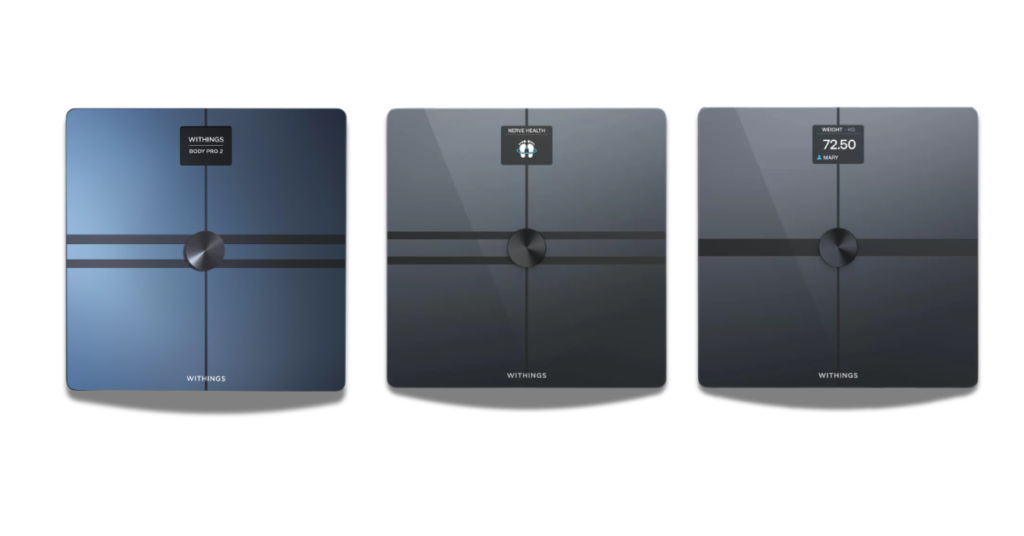
1. Smart scales
Not all scales are equal. The Withings Body BMI offers simple weight and BMI tracking, which provides a useful baseline. The Body Smart ($199.99) goes further, measuring body composition, including muscle mass, fat mass, and body water, alongside heart rate.
For women in midlife, knowing whether a change in weight reflects fat gain, muscle loss, or a fluctuation in body water is far more useful than the number alone. The Body Comp ($359.00) adds cardiovascular health insights and nerve activity measurements, while the Body Scan ($799.00) is the most advanced option, offering segmental body composition analysis and detailed cardiovascular assessment.
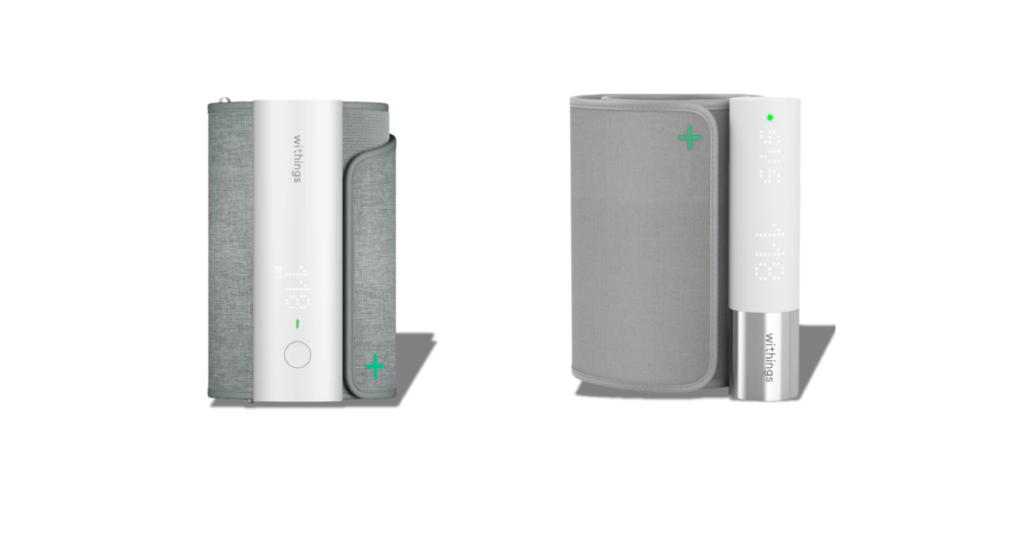
2. Blood pressure monitors
The Withings BPM Connect ($179.99) provides medically accurate blood pressure and heart rate readings with colour-coded feedback to help you interpret your results. This kind of consistent, home-based monitoring is far more informative than a single clinic reading.
The BPM Core ($499.99) takes this further, incorporating a full ECG and heart sound recording that can help detect atrial fibrillation and valvular heart disease. For women at higher cardiovascular risk, this represents a meaningful step up in what's possible at home.
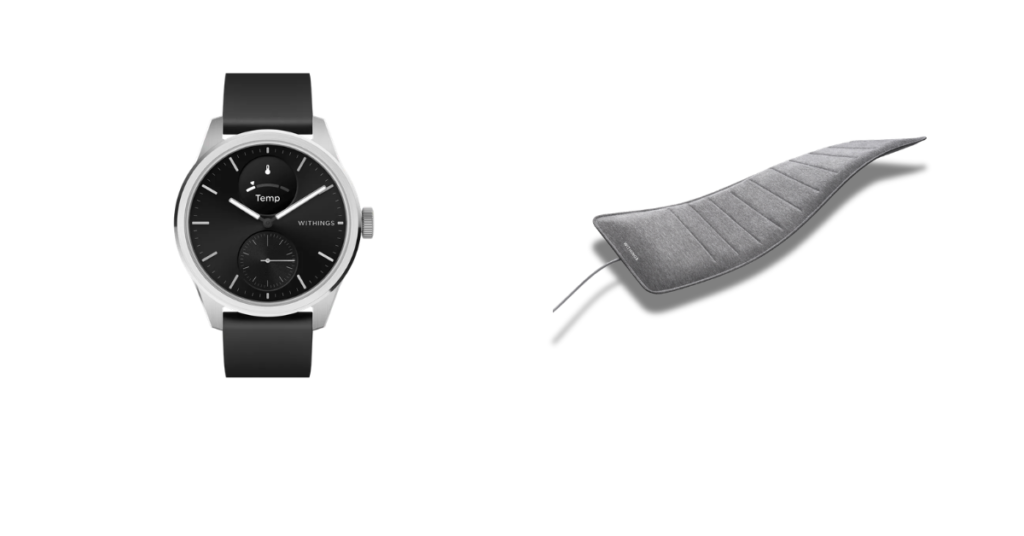
3. Smartwatches and sleep monitoring
The ScanWatch 2 ($599.00) offers continuous temperature tracking, ECG, blood oxygen monitoring, and sleep analysis. The ScanWatch Nova ($799.00) brings the same health functionality with a premium design and an impressive 30-day battery life.
The Sleep Analyser sits under the mattress and passively tracks heart rate, breathing patterns, snoring, and indicators of sleep apnoea. For women whose sleep is disrupted by perimenopause symptoms, this can provide genuinely useful long-term data without requiring any change to your bedtime routine.
4. Bringing your own device
If you already own a compatible device, that counts too. CaptureCare supports data from Apple Watch, Garmin wearables, and the Oura Ring. You don't necessarily need to purchase new equipment to begin building a meaningful health picture.
Data Is Only as Useful as the Context Around It
Here is where the real difference lies. A smart scale or blood pressure monitor can give you numbers. But numbers without context, without someone who knows your health history, your lifestyle, your family background, and your previous readings, can be confusing, anxiety-provoking, or simply ignored.
CaptureCare's own research found that more than 50% of midlife women already own a smart health device. But only 33% feel confident interpreting the data those devices produce.
This is the gap that the CaptureCare programme is designed to close. When you're enrolled, the devices aren't just handed to you with an app login. Your dedicated nurse reviews your data over time, identifies patterns, and provides clinical context. They're watching for trends you might miss: a gradual increase in resting heart rate, a pattern of elevated blood pressure in the evenings, or disrupted deep sleep following a sustained period of stress.
This is why the distinction between what medical-grade health monitoring actually means matters. It's not just about the accuracy of the devices. It's about having qualified clinical oversight applied to your data consistently over time.
What to Look for in a Health Monitoring Device
If you're considering adding home-based health monitoring to your routine, a few things are worth prioritising:
- Medical-grade accuracy, not fitness-tracker approximations
- The ability to track trends over time, not just single readings
- Compatibility with a programme that provides qualified clinical oversight
- Ease of use, so that regular measurement doesn't become a chore
The devices themselves are tools. The value comes from what happens next: a trained professional reviewing your patterns with you, asking the right questions, and helping you understand what the data actually means for your health.
Start Tracking What Actually Matters
Midlife is not a health emergency waiting to happen. But it is a time when your body is genuinely changing and when the gap between standard annual appointments and what you actually need can widen considerably.
The right monitoring devices, paired with a nurse who is watching your patterns over time and not just your snapshots, can make that gap much smaller.
Amelia Dickison, founder of CaptureCare:
Most women come to us sensing something is wrong but lacking the words or data to explain it. The devices give us the evidence. But it's the relationship with a nurse who knows you over time that turns that evidence into something meaningful."
If you'd like to learn more about how nurse-led monitoring and medical-grade devices can support your health in midlife, explore the CaptureCare programme and join the waitlist today.