We Asked 59 Australian Women About Their Midlife Health. Here's What They Told Us.
We Asked 59 Australian Women About Their Midlife Health. Here's What They Told Us.
Something shifts in your forties and fifties that few women are truly prepared for. It is not always a major health event or a sudden diagnosis. More often, it is a quiet loss of certainty. You may still be managing work, family, and daily responsibilities, yet find yourself wondering whether the tiredness, weight changes, poor sleep, or low energy are simply part of midlife or signs that something deeper deserves attention.
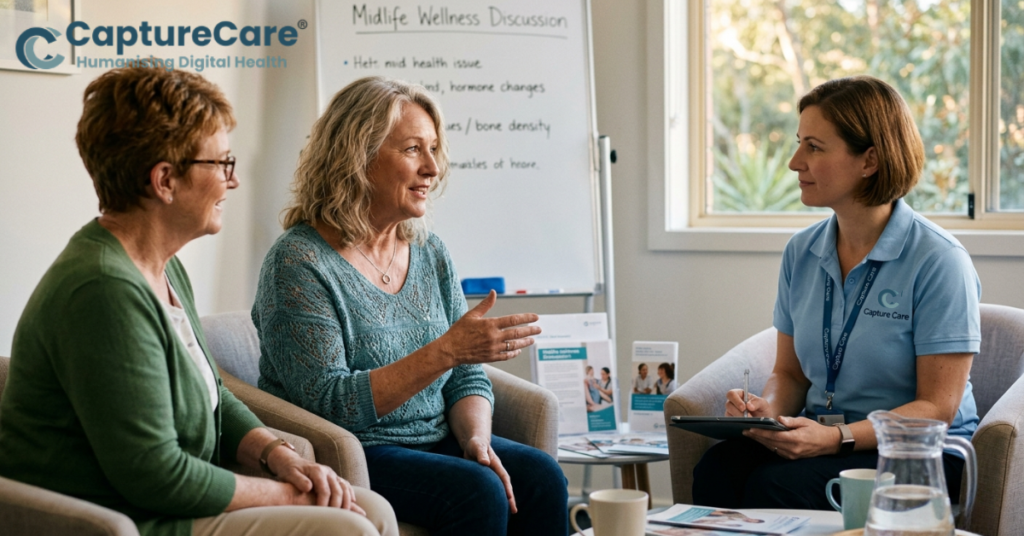
To better understand that experience, we asked Australian women to share what midlife health really feels like. Fifty-nine women from across the country took part in a dedicated survey, and ten joined a focus dinner where they spoke openly about their concerns, frustrations, and priorities. Their stories did not point to women falling apart. Instead, they revealed a group of capable, high-functioning women carrying a heavy mental and physical load while questioning whether their health is truly being seen and supported.
What emerged was honest, thoughtful, and deeply familiar. These women were not looking for hype or quick fixes. They wanted clarity, reassurance, and a better understanding of what was happening in their bodies. Here is what they told us.
Who These Women Are
The profile that emerged from our survey is remarkably consistent. Eighty percent of respondents are aged between 40 and 55. Eighty percent identify as perimenopausal or menopausal. Sixty percent are working full or part-time, and around half are managing one or two ongoing health conditions alongside everything else.
But the fuller picture comes from what sits beneath the surface of daily life. Forty percent report experiencing prolonged stress. Thirty-five percent are actively caring for children, ageing parents, or both. These are not women with the luxury of putting their health at the top of the list. They are managing careers, households, and the relentless mental load of being the person who holds everything together.
What stood out most was how high-functioning this group is. They show up, they manage competing responsibilities, and they generally cope. They are not seeking alarm or drama. What they are quietly looking for is clarity. According to Jean Hailes for Women's Health, many Australian women enter midlife with limited preparation for the hormonal and physiological changes ahead. Our survey bears that out: not in dramatic ways, but in the steady, persistent uncertainty that sits just underneath the surface of daily life.
These women represent thousands of others across Australia who are experiencing the same thing. You are not alone in feeling this way.
The Gap Between GP Appointments
When we asked women how they manage health concerns between GP visits, the responses told a clear story. Sixty-five percent said they feel "mostly fine but sometimes unsure," or described themselves as "often second-guessing" whether something they are experiencing warrants attention. Only 20 percent said they would immediately book a GP appointment when something felt off.
The rest? They are Googling symptoms, waiting to see whether the concern resolves itself, or quietly shelving the worry until it feels serious enough to act on. Forty-five percent fell into this category.
Thirty percent of survey respondents reported leaving GP appointments without full clarity about what had been discussed or what to do next. Not because their doctors are not trying, but because a standard 15-minute appointment cannot hold everything a midlife woman is managing. We have written more about this in our piece on the space between appointments where women are left alone.
Research published in the Medical Journal of Australia has identified significant gaps in GP training around menopause management, with up to 85 percent of symptomatic women remaining undertreated or inadequately supported. Our survey reflects that finding in very personal terms.
This is not a criticism of individual GPs. It is an acknowledgement that midlife women need more continuity of support than the current system is designed to provide. The gap between appointments is where a lot of unaddressed concerns live.
What Women Are Actually Worried About
The concerns that came through most clearly in our survey deserve to be named plainly. For many midlife women, the issue is not just one symptom but the feeling that several things are shifting at once. Seventy-five per cent of respondents pointed to weight gain and changes in body composition as a major concern.
Sixty percent reported low energy and ongoing fatigue, while fifty-five percent identified perimenopause and hormonal health as key issues affecting how they feel day to day.
| Health concern | Share of women who raised it |
| Weight gain and body composition changes | 75% |
| Low energy and persistent fatigue | 60% |
| Perimenopause and hormonal health | 55% |
Sleep disruption, brain fog, and mental overload also came up repeatedly in both the survey and the focus dinner. Several women described a quiet worry that something important might be missed in the background.
That is not overreacting. It is a reasonable response when many midlife changes are often dismissed as normal. If this feels familiar, our piece on perimenopause symptoms women don't expect may help put some of those changes into context.
The Technology Gap
More than half of survey respondents own a smart health device of some kind. Fitness trackers, smart scales, blood pressure monitors, sleep trackers. The devices exist. But only a third said they feel confident interpreting what the data means for them personally.
The average self-rated confidence score for understanding device data was 2.8 out of 5. Women have access to more health information than any previous generation, but without clinical context, that information frequently generates more anxiety than clarity. Data without interpretation is not insight. It is noise.
What Women Actually Want From Healthcare
The focus dinner brought together ten women who spoke with remarkable openness. Several mentioned sharing things they had never said aloud before. What became clear very quickly is that emotional safety is not a bonus feature in healthcare. For this group of women, it is the prerequisite.
When we asked what would make a health service genuinely trustworthy, a clear and consistent picture emerged:
- Seeing the same trained nurse every session, someone who knows their history and has built familiarity over time.
- A female-led service with real-life understanding of midlife health, not just clinical knowledge.
- Integration with their existing GP so that care is joined up, not fragmented across multiple providers.
- Medical oversight by women's health specialists.
- Plain-English summaries of health data, rather than jargon-heavy reports.
- No constant alerts or notifications designed to provoke anxiety rather than action.
Loneliness came up repeatedly among women aged 55 and over. Not just physical isolation, but the specific loneliness of feeling like no one is consistently watching over their health. These women were not asking for more data. They were asking for interpretation, continuity, and the quiet reassurance of being genuinely monitored.
This is also why ongoing health monitoring matters so much at this stage of life. Patterns tell you things that single appointments cannot.
All women at the focus dinner also emphasised the importance of visible medical credibility and clinical oversight. Trust, for this group, is earned through structure, consistency, and transparency.
What These Findings Mean
These findings reflect something many midlife women already feel but may struggle to put into words. The Australian Institute of Health and Welfare has long pointed to gaps in preventive health support for women during midlife, particularly around cardiovascular health, hormonal change, and chronic disease risk. What our survey shows is how those gaps are felt in real life: by women who are holding families, work, and daily responsibilities together while trying to make sense of changes in their own bodies with very little consistent support.
The fifty-nine women who shared their experiences are not outliers. Their responses reflect a much broader reality for Australian women aged 40 to 60. They are capable, responsible, and highly functional, yet many still feel left to piece their health together on their own. Behind every percentage in this survey is a real woman, a real concern, and a real opportunity to do better.
Why CaptureCare Exists
CaptureCare was built in response to exactly these kinds of experiences. Many women are not asking for more appointments or more health data for the sake of it. What they want is continuity, context, and someone medically credible who can help them understand what is changing between appointments.
CaptureCare uses connected health devices from Withings to collect ongoing biometric data, which is then reviewed by a qualified nursing team with an understanding of midlife health.
As founder Amelia Dickison explains:
“I started CaptureCare because I kept hearing the same story. Women who were managing everything, staying on top of their health as best they could, and still feeling like they were flying a little blind. They deserved better continuity, better clinical context, and someone genuinely in their corner between appointments.”
If you recognised yourself in these findings, you were far from alone. To learn more about how we support midlife women through ongoing nurse-led health monitoring. The waitlist and pilot programme details are available there. You do not have to manage midlife health on your own.