The Business Case for Investing in Women's Midlife Health: Why Corporate Wellness Programmes Need to Catch Up
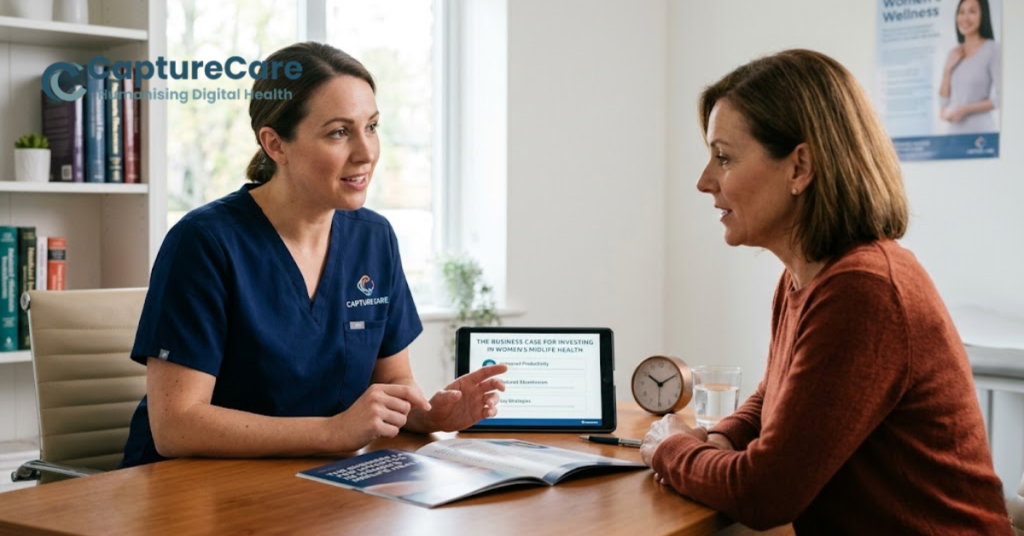
The Business Case for Investing in Women's Midlife Health: Why Corporate Wellness Programmes Need to Catch Up
You have shown up to work through night sweats that kept you awake until 3am. You have sat through back-to-back meetings managing brain fog so thick it felt like thinking through cotton wool. You have quietly pushed through joint aches, mood shifts and a crushing fatigue that no amount of coffee could fix, all while wondering if you were somehow doing it wrong.
You were not doing it wrong. You were doing what millions of Australian women do every single day: working through perimenopause and menopause without adequate support, because most workplaces were simply never built with midlife women in mind.
That is starting to change. But not fast enough. And the cost of that gap, to businesses, to the economy, and to individual women, is far greater than most employers realise.
The Scale of the Problem: Who Is Actually Affected
Menopause is not a niche health issue. In Australia, the average age of natural menopause is 51, meaning women typically begin experiencing perimenopause symptoms from their mid-to-late 40s. Given that perimenopause can last anywhere from four to ten years before the final menstrual period, many women are managing significant symptoms throughout what are often their peak career years.
More than 1.6 million Australian women are employed at the time they transition through menopause. Globally, the International Menopause Society estimates that by 2025, approximately 1.1 billion women worldwide will be postmenopausal, up from around 470 million in 1990. The sheer volume of women in this life stage, and in the workforce during it, makes this one of the most significant and consistently overlooked occupational health issues of our time.
Symptom prevalence adds further weight to that. Research published in the journal Menopause indicates that up to 85 percent of women experience at least one bothersome menopause-related symptom, with approximately 25 percent describing their symptoms as severe.
The most commonly reported symptoms affecting workplace performance include sleep disruption, cognitive difficulties such as impaired memory and concentration, fatigue, mood changes, anxiety, and hot flushes. These are not minor inconveniences. These are health changes that directly interfere with the ability to perform, focus, and sustain a career.
What This Actually Costs Australian Business
The economic impact of menopause on the Australian workforce is significant and increasingly well-documented, even if it has only recently attracted serious policy attention.
Researchers from Macquarie Business School calculated that women leaving the workforce prematurely due to menopause costs Australian companies more than $10 billion a year. The Australian Institute of Superannuation Trustees puts the broader economic impact higher still, at an estimated $17 billion annually, once downstream effects on superannuation balances, retirement income, and workforce continuity are factored in.
A 2025 study published in the peer-reviewed journal Climacteric found that women experiencing menopause symptoms had 57 per cent more days of reduced productivity compared to women without symptoms. This aligns with international data.
A large-scale study published in the American Journal of Obstetrics and Gynaecology found that menopause-related productivity loss costs the United States economy approximately USD $1.8 billion in lost working time per year, with an additional USD $26.6 billion annually when medical costs are included. While not directly comparable, the proportional burden on the Australian economy is likely consistent with these findings.
Australian Bureau of Statistics data, cited by Chief Executive Women, shows that women are retiring an average of 12 years earlier than they want to. This is not a voluntary retirement trend. It is, in large part, a health and support failure, one with lasting consequences for women's financial security and the broader economy.
The superannuation dimension is particularly significant. Women in Australia retire with an average superannuation balance of around $157,000 compared to $270,000 for men, a gap of roughly 42 per cent. Early workforce exit driven by unmanaged menopause symptoms directly worsens this disparity.
For women already facing a gender pay gap of 21.8 per cent, according to the Workplace Gender Equality Agency's most recent data, losing additional compounding years of super contributions is a compounding financial injury.
Why Corporate Wellness Programmes? Keep Missing the Mark
Most corporate wellness programmes were designed around a general, often male-default model of health. They offer gym subsidies, step-count challenges, mental health days and employee assistance programme hotlines. These are not without value, but they largely fail to address the specific and significant health transition that nearly half the workforce will experience in their 40s and 50s.
The gap is not simply one of intention. It reflects a historical absence of menopause from occupational health frameworks, clinical guidelines, and HR policy design. A 2023 survey conducted by the Australasian Menopause Society found that the majority of Australian women feel their workplace does not adequately support them through menopause. Many report having no idea whether their employer has any relevant policy at all.
The 2024 Australian Senate Enquiry into menopause and perimenopause brought national attention to this issue, delivering 25 recommendations, 16 of which the Australian government accepted. Among the accepted recommendations were calls to investigate the economic impact of menopause on workforce participation, income, superannuation balances, and retirement age, as well as the need to improve awareness of menopause-related rights and workplace accommodations. As scrutiny of Australia's menopause treatment gap continues to grow, it is becoming harder for employers to ignore midlife women's health.
In 2025, the Australian Public Service Commission issued a formal circular requiring agencies to actively support employees experiencing menopause and perimenopause symptoms in the workplace. One in five Australian public service employees is a woman aged 45 to 60. That figure alone demonstrates that this is not a marginal staffing concern; it is a mainstream workforce management issue.
The Workplace Gender Equality Agency is also now considering whether to collect formal data on employer menopause support as part of its existing reporting framework. If that measure is introduced, Australian employers will face greater accountability for the support they do, or do not, provide.
International precedent is also instructive. The United Kingdom's government launched a dedicated Menopause Employment Champion in 2022, and a 2023 report from the Fawcett Society found that one in ten women in the UK who worked during menopause had left a job due to symptoms.
Of those who stayed, 52 percent said they worked fewer hours than they otherwise would have. These patterns are not exclusive to the UK. The data consistently points in the same direction: without targeted support, women leave, reduce their hours, or quietly disengage.
The Diagnostic Gap: Why Symptoms Go Unrecognised for So Long
One of the most underappreciated barriers to effective menopause support is the significant delay between the onset of symptoms and accurate diagnosis.
Research published in the journal Climacteric has found that the average time from first seeking help for menopause-related symptoms to receiving an accurate diagnosis can be more than two years. Jean Hailes for Women's Health notes that perimenopause symptoms are frequently misattributed to stress, depression, anxiety, or thyroid conditions, rather than being recognised as hormonal in origin. This means women may spend years cycling through treatments that do not address the underlying cause.
A survey commissioned byNewson Health in the UK found that 42 percent of women were incorrectly diagnosed with another condition before receiving a menopause diagnosis. More than half had been prescribed antidepressants before hormonal assessment was recommended. While Australian-specific data on misdiagnosis rates is still emerging, there is no reason to believe the patterns differ substantially.
The consequence for the workplace is that women who might benefit significantly from targeted hormonal support, lifestyle interventions, or clinical monitoring are instead managing undiagnosed and inadequately treated symptoms on their own, often in a professional environment that offers no structural support.
This is also reflected in how women interact with the healthcare system during this period. A 2022 study in Maturitas found that women with significant menopause symptoms had substantially higher rates of GP consultations, specialist referrals, and hospital presentations compared to matched controls without symptoms.
The healthcare system carries a considerable burden from undertreated menopause, and so do the individuals within it.
What Health Monitoring Actually Changes
The women most at risk of disengaging or leaving their roles are often those whose symptoms are going unrecognised, sometimes even by their own GP.
Perimenopause can begin years before the final menstrual period. Symptoms like fatigue, mood changes, disrupted sleep, heart palpitations and changes in memory or focus can be subtle at first and easy to dismiss as stress, overwork or simply ageing. Without. consistent health data showing a pattern over time, it is very easy for both women and their clinicians to miss what is actually happening in the body. As we have explored previously, a single test rarely tells the full story.
This is where continuous, nurse-led health monitoring changes the picture. At CaptureCare, a dedicated nurse works with you to track your health metrics over time, rather than relying on a single appointment snapshot. Using smart health devices through our partnership with Withings, your nurse captures and reviews data, including blood pressure trends, sleep quality, resting heart rate and weight patterns on an ongoing basis.
When a pattern emerges, your nurse flags it in plain English, helps you understand what it might mean, and supports you in taking it back to your GP with clear, consistent data that leads to better conversations and faster action.
Research consistently shows that continuity of care and longitudinal health monitoring improve clinical outcomes. A systematic review published in the British Journal of General Practice found that patients who had access to consistent primary care relationships had significantly better management of chronic and complex conditions compared to those receiving episodic care.
For midlife women navigating a hormonal transition that affects multiple body systems simultaneously, this kind of ongoing support is not a luxury. It is a clinical necessity.
What Midlife Women Can Do Right Now
Whether or not your workplace has caught up, there are practical steps worth taking during this transition.
Start by tracking your symptoms consistently. Keep a simple record of changes in sleep, energy, mood, memory, cycle patterns, and physical symptoms such as headaches, joint pain, or hot flushes. Over time, this builds a picture that is far more useful to a clinician than a verbal description of feeling off. It also gives you stronger grounds to advocate for yourself in appointments.
Do not rely on one appointment or one test result. Many midlife women are told their results are normal even when they are clearly experiencing symptoms that affect daily life. Hormonal levels during perimenopause fluctuate significantly from cycle to cycle, meaning a single measurement may not reflect the broader pattern.
Ask specifically for menopause-informed support. If general advice is not addressing your symptoms, ask your GP about longer consultations, referral to a menopause specialist, or access to hormonal assessment. The Australasian Menopause Society maintains a register of healthcare providers with menopause-specific training. Being specific about how symptoms are affecting your work, sleep, relationships and daily function gives your clinician what they need to act.
Look into your workplace entitlements. Many women do not know whether their employer has a menopause policy, flexible working arrangements, or occupational health referral pathways. If formal support does not exist, a conversation with HR or a trusted manager about practical adjustments, including flexible hours, temperature control, or workload modifications, may still open meaningful doors.
Prioritise monitoring over crisis management. Tracking measures such as blood pressure, resting heart rate, sleep quality and weight trends adds critical context to the symptoms you are experiencing. Identifying changes early means acting earlier, with more information and more options.
Your Health Through This Season Deserves Proper Attention
The business case for investing in women's midlife health is clear, and the evidence base for action is growing with every year. But before it becomes a policy document or a budget line, it is above all personal.
"The data tells us what many midlife women already feel in their bones: they are being underserved by the systems they rely on, at work and in healthcare," says Amelia Dickison, founder of CaptureCare. "What we want to offer is something different, a consistent nurse presence who knows your patterns, notices the changes and helps you navigate this stage with real information rather than guesswork."
For women who are ready to move from reactive to preventative health monitoring, nurse-led support that keeps pace with the realities of midlife is a meaningful first step. Join the waitlist or pilot programme today and take that step towards health monitoring that truly keeps up with you.