Perimenopause Symptoms Most Women Don't Expect
Perimenopause Symptoms Most Women Don't Expect
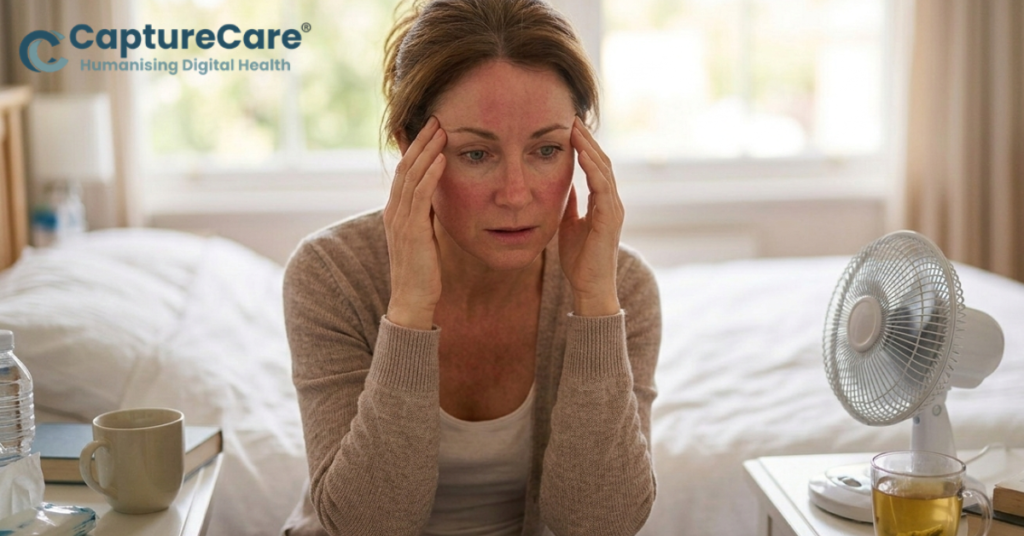
You're 42, maybe 45. You've been exhausted for months, your concentration keeps slipping, and a low-grade anxiety has settled in for no obvious reason. You've had blood tests. Everything looks fine.
Nobody has mentioned perimenopause.
According to Australian Prescriber, the average age of menopause in Australia is 51, meaning the hormonal shifts of perimenopause can be well underway years before most women realise it. And the symptoms rarely look like what we've been told to expect. The cultural shorthand is hot flushes and irregular periods. The reality is often brain fog, irritability, disrupted sleep, dizziness, and a loss of motivation that is hard to distinguish from burnout.
Recognising the full picture is the first step towards getting proper support.
What Is Actually Happening in Your Body
Perimenopause is not a moment. It is a gradual transition, often playing out over four to ten years, where oestrogen and progesterone fluctuate before eventually declining. Because these hormones affect far more than your cycle, the changes can show up in ways that feel unrelated.
Here is what is going on underneath the surface:
- Hormones fluctuate, not fall in a straight line, which is why symptoms can come and go.
- Oestrogen and progesterone influence brain chemistry, sleep, mood, and concentration.
- They also affect heart and blood vessel function, bone density, digestion, and temperature regulation.
- When levels become erratic, symptoms can ripple across multiple systems at once.
- The overlap with other conditions is real, including anxiety disorders, thyroid dysfunction, iron deficiency, and burnout, which is why perimenopause is often missed for months or years.
A landmark symptom study by Newson Health Clinic, one of the UK's leading menopause specialist clinics, tracked 84 symptoms across 1,352 patients. The findings challenged the usual narrative. Fatigue and low energy were the most frequently reported symptoms, experienced by 95% of women. Memory problems came second at 94%. Irritability was third at 93%. Feeling anxious, difficulty concentrating, mood swings, and low motivation also ranked in the top ten.
Hot flushes, by contrast, ranked 47th, reported by 55% of patients. Night sweats ranked 43rd.
These findings matter because they suggest that for many women, the most disruptive perimenopause symptoms are cognitive and emotional, not vasomotor. Yet hot flushes and night sweats still dominate the public story, leaving many women without a framework to make sense of what is happening.
Why Perimenopause Symptoms Are So Often Missed
Many of the most common perimenopause symptoms look exactly like something else entirely.
Brain fog and poor concentration are frequently attributed to stress or overwork. Chronic anxiety or low mood may be diagnosed as a new mental health condition, with antidepressants prescribed before hormonal causes are considered. Digestive complaints prompt investigation for irritable bowel syndrome. Heart palpitations, dizziness, and headaches can lead to cardiovascular or neurological workups that return unremarkable results.
This is not a criticism of GPs, who face significant time pressures and work within guidelines that have historically underrepresented women's hormonal health. But the pattern is well documented. Research published in the Medical Journal of Australia highlights meaningful skill gaps in perimenopause and menopause care, with many women receiving insufficient assessment or being told their symptoms are simply a consequence of stress or ageing.
The result is that a substantial proportion of women are left to manage significant symptoms without any clear explanation and without knowing whether what they are experiencing is part of a recognised, treatable hormonal transition.
There is a real and important distinction between feeling fine and feeling well. Normal results on a single test do not mean that nothing is changing in your body.
The Symptoms Worth Watching For
Based on the Newson Health Clinic data, many common perimenopause symptoms are not the ones women expect.
Here is a shorter snapshot of what often shows up:
| Symptom | How it can show up | Newson Health Clinic data |
| Fatigue and low energy | Waking tired, afternoon crashes | 95% |
| Memory and word-finding issues | Losing words, forgetfulness | 94% / 90% |
| Irritability and mood swings | Short fuse, emotional shifts | 93% / 90% |
| Anxiety and nervous tension | On edge, racing thoughts | 92% / 88% |
| Low motivation | Feeling flat, less drive | 89% |
| Heart palpitations | Fluttering or pounding beats | 66% |
| Sleep disruption | Trouble falling or staying asleep | Common |
| Dizziness or balance changes | Lightheaded, slightly unsteady | Common |
| Digestive changes | Bloating, constipation, gut shifts | Common |
| Dryness (skin, hair, eyes) | Drier eyes/skin, hair changes | Common |
If several of these feel familiar, especially if they are new or changing, it may be worth discussing perimenopause with a health professional in the context of your age, cycle patterns, and overall health.
Why Tracking Matters More Than a Single Appointment
One of the most frustrating aspects of perimenopause is that standard blood tests often fail to capture what is actually happening. Hormone levels fluctuate significantly from day to day and week to week. A test taken on one occasion may show results within the normal range even when a woman is experiencing significant and disruptive symptoms. This is precisely why normal results don't always mean you feel normal.
What longitudinal monitoring can do is make the invisible visible.
When health data is tracked over time, patterns begin to emerge that a single appointment simply cannot reveal. A resting heart rate that gradually climbs over three months. Sleep quality that deteriorates in predictable cycles. Blood pressure readings that vary in ways that correspond to symptom flares. These patterns, seen together over time, tell a coherent story that can fundamentally change the nature of a conversation with a GP or specialist.
This is where wearable health technology has genuinely changed what is possible for midlife women. Withings smart health devices, which are integral to how nurse-led monitoring is delivered through the CaptureCare partnership, track physiological data continuously across multiple body systems. Rather than waiting for a symptom to become severe enough to prompt a GP visit, women can build a real-time record of how their body is responding to hormonal change over weeks and months.
This kind of monitoring is not about finding something wrong. It is about building a longitudinal picture of your health that equips you, and your health team, with the evidence needed to make informed, confident decisions. Midlife health needs monitoring, not guesswork.
It is also worth recognising that hormonal change does not happen in isolation. How life stress shows up in the body over time is deeply intertwined with how perimenopause presents, and continuous monitoring helps disentangle these overlapping influences.
Practical Steps for Midlife Women
If you are in your late 30s to early 50s and recognise yourself in some of what has been described above, there are concrete steps you can take right now.
Start Documenting Your Symptoms
Keep a simple daily record: energy levels, sleep quality, mood, cognitive sharpness, and any physical symptoms that feel new or unusual. Note patterns in relation to your menstrual cycle where relevant. This kind of record is enormously useful in a clinical setting. It moves the conversation from memory and impression to observable pattern.
Know What to Ask For
When you see your GP, ask specifically about perimenopause as a possible explanation for what you are experiencing. Ask whether a hormonal assessment is appropriate, what it can and cannot tell you, and whether referral to a menopause specialist is an option.
Jean Hailes for Women's Health provides excellent resources to help you prepare for these conversations, including guides to symptoms and treatment options.
Consider Continuous Monitoring
A single set of results at a single point in time has real limits when it comes to a transition as fluid and variable as perimenopause. Tracking sleep, resting heart rate, blood pressure, and other physiological markers over time gives your health team the kind of longitudinal data that makes patterns far more visible.
You can explore Health Support Services as a starting point for understanding what proactive, nurse-led monitoring can look like in practice.
You Deserve to Know What Is Happening in Your Body
Perimenopause is not a disorder. It is a significant hormonal transition, and the symptoms it produces deserve to be taken seriously, tracked carefully, and responded to with the same rigour that any other health change would receive. The evidence is clear that what most women experience during perimenopause extends well beyond hot flushes, and the first step is simply knowing that.
"So many of the women I speak with have spent years being told their symptoms are just stress or part of getting older," says Amelia Dickison, founder of CaptureCare. "When you can show a pattern of physiological change over time, it changes the conversation entirely. Women deserve to have that evidence on their side."
If you are in midlife and want to understand what is changing in your body, our pilot programme offers nurse-led monitoring designed to do exactly that.