Stroke Risk and Women in Midlife: What Every Australian Woman Should Know
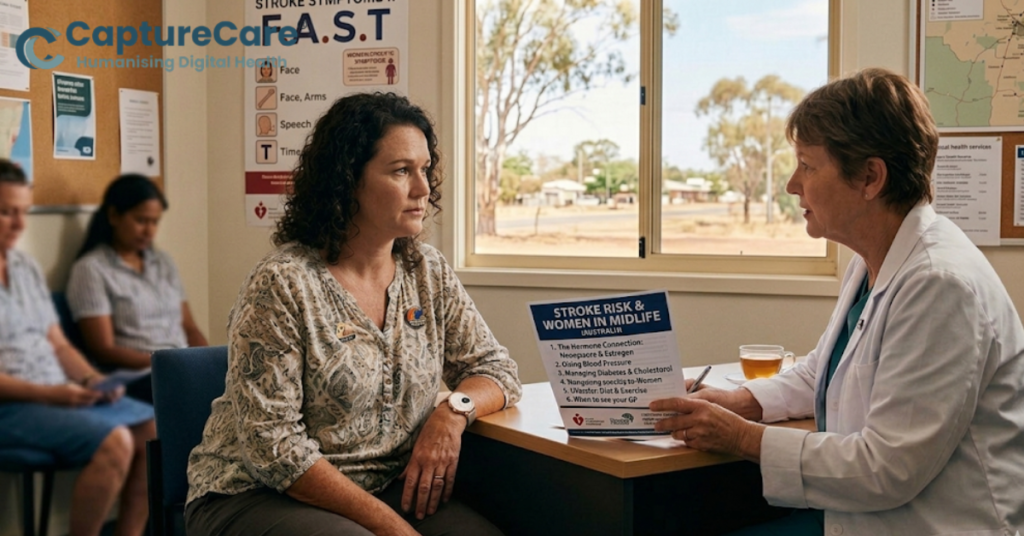
Stroke Risk and Women in Midlife: What Every Australian Woman Should Know
When most of us picture a stroke, we imagine an older man. It is a quiet bias embedded in decades of public health messaging, and it has real consequences for women in midlife.
Stroke is one of Australia's leading causes of death and long-term disability, and it does not discriminate. According to the Australian Institute of Health and Welfare (AIHW), there were 41,100 stroke events in Australia in 2023 — roughly 113 every single day. Stroke was the underlying cause of 8,400 deaths in 2022. These are not abstract statistics. They represent mothers, sisters, colleagues, and friends.
What many women do not realise is that their stroke risk changes significantly during and after menopause. The hormonal shifts of midlife alter the cardiovascular system in ways that are rarely discussed during a standard GP appointment. And because up to 80% of strokes are considered preventable, understanding your personal risk, and acting on it early, can make a profound difference.
This is exactly the kind of proactive, informed health awareness that midlife women deserve.
How Menopause Reshapes Your Stroke Risk
Menopause can shift stroke risk in ways that are easy to miss at first. As hormone levels change, several parts of cardiovascular health can change with them.
- Oestrogen offers important cardiovascular support: During the reproductive years, oestrogen helps keep blood vessels more flexible, supports healthy cholesterol levels, and helps regulate blood pressure. As it declines during menopause, that protection starts to lessen.
- Stroke risk rises after menopause: Research shows that in the years after menopause, a woman's stroke risk can increase significantly. Women who experience early menopause may face an even higher risk than those who reach menopause at the usual age.
- Blood pressure can climb quietly: One of the biggest changes during midlife is the tendency for blood pressure to rise. This can happen even in women who have always had normal readings, which is why regular checks become more important during this stage.
- Other metabolic changes can add to the risk: Menopause can also affect cholesterol, blood sugar regulation, and body composition. Over time, these shifts can work together and place extra strain on cardiovascular health.
- Midlife is a key time to monitor your health: This is not about alarm. It is about awareness. The earlier these changes are noticed, the easier it is to take practical steps that may help reduce long-term stroke risk.
These changes are common, but they should not be ignored. Midlife is often the point where consistent monitoring becomes far more useful than occasional check-ups alone.
Why Stroke Risk in Women Is So Often Missed
One of the greatest challenges with stroke risk in midlife women is that it tends to be invisible until it is not.
Many of the early warning signs of elevated cardiovascular risk, such as fatigue, headaches, difficulty concentrating, and changes in sleep, overlap with common perimenopause symptoms. This creates a dangerous blind spot. Women may be told they are simply experiencing hormonal change when, in fact, their blood pressure or heart health also warrants close attention.
Stroke Symptoms in Women Can Look Different
While the FAST acronym (Face drooping, Arm weakness, Speech difficulty, Time to call 000) captures the most recognised symptoms, women are more likely to experience less typical signs. These can include sudden confusion, vision changes, a severe headache unlike anything experienced before, or unusual and unexplained fatigue. Because these symptoms are less well known, they are easier to dismiss or misattribute.
There is also the structural problem of time. Most women see their GP once or twice a year, if that. A single blood pressure reading, taken perhaps when you are already anxious or running late, provides only the narrowest snapshot of your cardiovascular health. As explored in the space between appointments, where women are left alone, the gaps between those visits are where risk often quietly builds.
Closing that gap requires a different approach to monitoring. Not reactive. Not once a year. Something more consistent, more attentive, and more attuned to patterns over time.
Why Continuous Monitoring Changes the Picture
The reassuring truth is that stroke is largely preventable. Knowing your numbers, particularly blood pressure and heart rate, and tracking them consistently over time gives you the ability to catch changes before they become crises.
This is why the shift from snapshot health data to pattern-based monitoring matters so much. A single blood pressure reading tells you very little on its own. A month's worth of readings tells you whether your pressure is trending upward, whether it spikes under certain conditions, and whether the lifestyle adjustments you are making are actually working. We explore this further in your midlife health needs patterns, not snapshots.
CaptureCare's Proactive Remote Patient Monitoring (PRPM) programme is built around exactly this principle. Using Withings smart health devices, participants track blood pressure, heart rate, and other key metrics from home, consistently, over time, with clinical oversight from registered nurses. This is not passive data collection. It is active, nurse-led monitoring that flags changes early and keeps you genuinely informed about what your body is doing.
For women navigating midlife, this kind of ongoing health awareness is genuinely protective. Conditions like hypertension, often symptom-free for years, are far easier to manage when they are caught early. Continuous monitoring creates the kind of clinical picture that a single annual check-up cannot.
It is also practical. Readings are taken at home, in your own time, as part of your daily routine. No waiting rooms, no rushed appointments, and no long gaps in your health data.
Practical Steps to Assess and Reduce Your Risk
You do not need to wait for a specialist referral to begin understanding your stroke risk. There are concrete steps you can take right now.
Step 1: Know your blood pressure numbers
High blood pressure is one of the most important risk factors for stroke, and it often develops without obvious symptoms. That is what makes it easy to miss, especially during midlife when changes in energy, sleep, or general wellbeing may be blamed on hormones alone.
If you are in perimenopause or post-menopause, have a family history of heart disease, or have had elevated readings before, it is worth checking your blood pressure regularly rather than assuming everything is fine. If you do not know your current numbers, finding that out is a simple but valuable first step.
Step 2: Complete the free Stroke Risk Assessment
The CaptureCare Stroke Risk Assessment takes around two minutes to complete. It asks straightforward questions about your health, lifestyle, and personal history and provides a personalised risk level along with practical next steps. It is a simple, accessible first step that requires no clinical appointment.
Step 3: Pay attention to less obvious symptoms
Know the full range of stroke warning signs in women, not just the FAST symptoms. Sudden confusion, vision changes, a severe and unfamiliar headache, or unexplained weakness are all reasons to seek immediate medical attention. Do not wait and see.
Step 4: Advocate for yourself at GP appointments
Ask for a blood pressure check at every visit. Request an overall cardiovascular risk assessment, not just a hormone check. If your symptoms are being attributed entirely to menopause, it is reasonable to ask whether your cardiovascular health is also being considered.
Your Midlife Health Deserves More Than a Once-a-Year Snapshot
Stroke risk rises during midlife, but it is not inevitable. With awareness, consistent monitoring, and the right support, women can take meaningful action before risk becomes reality.
Amelia Dickison, Founder, CaptureCare:
"Women in midlife are navigating profound hormonal change, and their cardiovascular health is shifting alongside it. The tragedy is that most of that change is happening between appointments, unseen. That is exactly the gap we are here to close."
If you are ready to understand your health more deeply and take a proactive approach to midlife wellbeing, we invite you to explore CaptureCare's PRPM program and join our waitlist. Our nurse-led service is designed for women who are curious, informed, and ready to take their health seriously, starting now.