Midlife Weight Trends in Australia: What the Numbers Actually Say
Midlife Weight Trends in Australia: What the Numbers Actually Say
If your body has felt different in your forties or fifties – heavier in places it wasn't before, slower to respond to the same habits that worked in your thirties – you are not imagining it. And you are not alone.
The data is clear on this. According to the Australian Institute of Health and Welfare (AIHW), 61% of Australian women are currently living with overweight or obesity. Among women aged 55 to 64, that figure climbs to over 70%. To put that in context: at ages 18 to 24, roughly 41% of women fall into that category. So across the midlife decades, from the mid-forties to mid-sixties, we see one of the steepest rises in body weight of any life stage for women.
These numbers are not here to alarm anyone. They are here because understanding what is actually happening at a population level is the first step to making sense of what is happening in your own body.
Why Midlife Is a Distinct Window
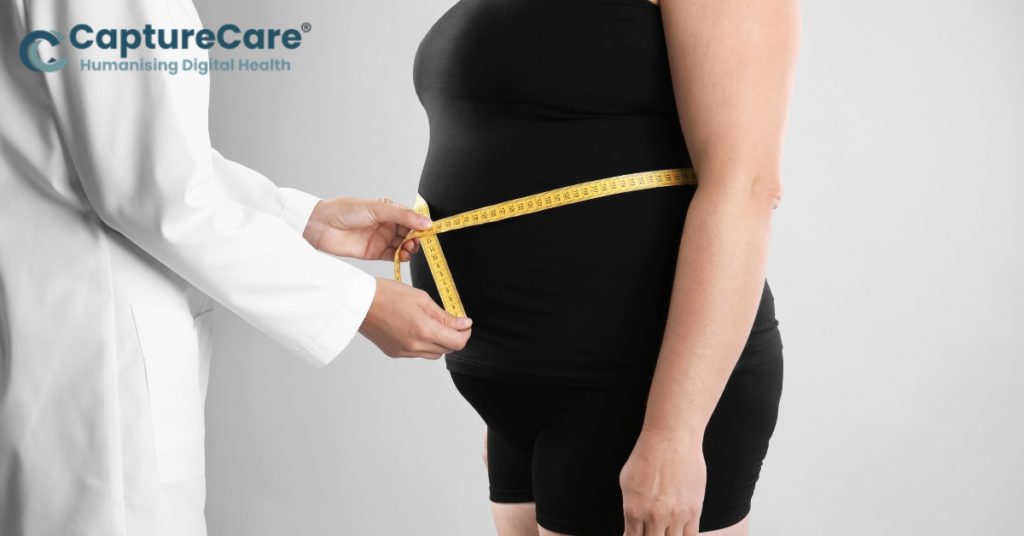
This is not simply a matter of eating more or moving less. The weight shifts that occur during perimenopause and menopause are tied to declining oestrogen, which changes where the body stores fat, typically less on the hips and thighs and more around the abdomen. According to the AIHW, 72% of Australian women have a waist circumference that indicates a high risk of metabolic complications, making waist measurement a more meaningful marker than scale weight alone.
Disrupted sleep and chronic stress compound this further. The Sleep Health Foundation notes that poor sleep directly affects the hormones that regulate appetite, making weight stability harder even when diet and activity haven't changed.
The standard advice 'eat less, move more' is a significant oversimplification for this life stage. The drivers are hormonal, physiological, and cumulative, and they deserve to be understood as such.
The Problem With How This Gets Managed
Many women describe a similar experience: they raise concerns about weight changes or fatigue at a routine GP appointment, receive standard advice, perhaps a referral, and leave feeling that nothing has really been addressed. That is not a criticism of individual clinicians. It reflects a structural limitation in how the healthcare system is set up.
Annual or biannual appointments capture snapshots, not trends. A single weight reading in isolation tells a clinician relatively little. But when the following are tracked consistently over weeks and months, they tell a very different story:
- Weight trend the direction over time, not the number on a given day
- Sleep quality duration, disruptions, and how it correlates with energy and appetite
- Energy-level patterns across the week that a single appointment cannot capture
- Stress markers ongoing load that may be influencing cortisol and weight distribution
Together, these can reveal patterns, prompt earlier conversations, and support more targeted responses. This is where the current standard of care has a genuine gap for midlife women.
What Tracking Over Time Actually Shows
Understanding your health in midlife requires more than a number on a scale. It requires context, consistency, and the right metrics tracked over time.
1. The Population Trend
The average adult BMI distribution in Australia shifted towards higher values from 2011–12 to 2022, driven primarily by increases in obesity rather than overweight. That is a population-level finding. At the individual level, the more useful question is whether your own data is trending in a direction worth paying attention to and whether anyone is helping you read it.
2. Why Scale Weight Misleads
Body weight alone is not the complete picture. Research increasingly points to body composition, the ratio of muscle mass to fat mass, as more clinically relevant than scale weight. Two women can have identical weight and height and very different health profiles, depending on their muscle mass, bone density, and fat distribution.
3. Waist Circumference Over BMI
Where fat sits matters as much as how much there is. Abdominal fat accumulation, which becomes more common after oestrogen declines, carries a different health profile than fat stored elsewhere. Tracking waist circumference consistently at the same point gives a more meaningful picture of risk than BMI alone.
4. Sleep and Appetite Are Connected
Sleep quality directly influences the hormones that regulate appetite, including ghrelin and leptin. Women who consistently sleep fewer than seven hours are more likely to experience increased hunger and reduced satiety signals the following day. Tracking sleep duration and quality as a health metric, not a lifestyle preference, changes how seriously it gets treated.
5. The Metrics Worth Tracking Together
No single marker tells the full story. The most useful approach in midlife is tracking these consistently:
- Body composition: muscle mass and fat percentage, not just total weight
- Waist circumference measured at the same point each time
- Sleep duration and quality, disruptions, and patterns over time
- Resting heart rate a useful indicator of cardiovascular fitness and recovery
- Stress patterns anything that correlates with disrupted sleep or appetite shifts
The challenge has always been that collecting this data reliably and having someone help you make sense of it has not been part of the standard primary care model.
The Role of Connected Monitoring
This is where technology has begun to close a real gap. Withings produces a range of clinically validated health monitoring devices, including smart scales that measure body composition, sleep trackers, and blood pressure monitors that can collect this data daily and passively, without adding significant effort to a woman's routine.
The data a Withings scale captures goes well beyond weight. A single morning weigh-in records weight, body fat percentage, muscle mass, and bone density. A Withings sleep tracker captures sleep duration, sleep stages, heart rate during sleep, and breathing disturbances. Over weeks, these become trend lines rather than isolated data points.
But data without context has limited value. That is the other half of the equation.
Nurse-Led, Continuous Support
CaptureCare is built around one core principle: continuous visibility, not periodic snapshots. Rather than a one-off consultation, the model pairs Withings monitoring devices with nurse-led support that is ongoing. A registered nurse reviews your health data every day, identifying changes in your weight trend, sleep quality, or resting heart rate before they become entrenched patterns.
This is not a coaching programme, and it is not a weight loss programme. It is clinical monitoring, designed to give midlife women the kind of ongoing visibility and professional support that has historically only been available in hospital or specialist settings. The nurse who monitors your data is not working from a single appointment. She is working from weeks of your actual daily measurements, and she will flag anything that warrants attention and help you understand what the trends mean in practical terms.
"Women are generating more health data than ever but often without continuity, clinical context, or anyone to help them make sense of it. I built CaptureCare because I lived that gap myself. You can look capable on the outside and be completely worn down on the inside. What changes things is having someone paying attention to your data every single day, not just when you manage to get an appointment." — Amelia Dickison
Practical Steps You Can Take Now
While you are waiting for better support structures, there are some evidence-informed habits worth building into your routine today.
- Track consistently, not obsessively: Daily weight fluctuations of 1–2 kilograms are normal and driven largely by fluid retention. What matters is the direction of the trend over weeks, not the day-to-day number.
- Prioritise sleep as a health metric: Women who sleep fewer than seven hours consistently are more likely to experience appetite dysregulation. Treating sleep as a measurable health input rather than a luxury changes how you approach it.
- Shift focus from weight to waist: Given the hormonal changes affecting fat distribution in midlife, waist circumference is a more useful personal metric than scale weight alone.
- Separate the factors you can influence: Stress, sleep, movement patterns, and meal timing are all levers. Understanding which ones are currently affecting your trend gives you somewhere specific to start.
- Bring data to your appointments: A screenshot of your sleep trend or a note of your waist measurements over six weeks is more useful to a clinician than a recalled sense of how things have been.
Small, consistent actions build the clearest picture over time. You do not need to change everything at once you need enough reliable data to understand what is actually happening in your body, and the right support to help you interpret it. That combination is what makes the difference.
The Takeaway
Midlife weight gain in Australia is not a personal failure. It is a documented, physiological reality, shaped by hormonal shifts, lifestyle accumulation, and a healthcare system that has not always been designed to support women through this specific transition.
What is changing is the capacity to monitor health continuously and to have clinical support that reflects your actual daily data not a six-monthly snapshot.If having a nurse track your health data every day and help you understand your trends sounds like the kind of support you have been looking for, join the waitlist today and be among the first to know when we open.