The Key Components of FemTech, And Where Preventative Monitoring Fits In
The Key Components of FemTech, And Where Preventative Monitoring Fits In
For most of human history, women's health research was an afterthought. Clinical trials defaulted to male participants. Symptoms that predominantly affected women were labelled vague, stress-related, or simply left unexplained. The result? A gap in care that millions of women navigate to this day.
That is starting to change. A growing sector called femtech, short for female technology, is bringing long-overdue innovation to women's health. From fertility tracking apps to medical-grade wearables, femtech is reshaping what it means to understand, monitor, and act on your own health data.
But femtech is not one single thing. It spans multiple categories, each serving different stages of a woman's life. For women moving through midlife, understanding those categories can help you identify where genuine, evidence-based support exists and where marketing fluff ends and meaningful care begins.
What Femtech Actually Covers
The term 'femtech' was coined in 2016 by entrepreneur Ida Tin, and the sector has grown substantially since. According to the Jean Hailes Women's Health Organisation, women's health has historically been underresearched and underresourced, particularly for conditions related to menopause and midlife wellbeing.
'Femtech' broadly refers to any software, diagnostics, devices, or services designed to address women's health needs. The sector spans everything from consumer wellness apps to clinically validated monitoring tools, and it continues to expand as researchers and developers pay closer attention to the specific biology and lived experience of women.
To make sense of what is available, it helps to look at the major categories individually.
The Main Categories of Femtech
Femtech covers a wide range of tools, platforms, and services built to support women’s health at different life stages. Looking at the main categories makes it easier to see where innovation is happening, what each area is designed to address, and why some parts of women’s health still need far more attention than others.
1. Fertility and Reproductive Health
This is one of the oldest and most developed areas of femtech. Cycle-tracking apps, ovulation prediction kits, and fertility monitoring devices have been available for well over a decade. More recently, technology has extended into egg-freezing support, hormone-level monitoring, and at-home fertility testing. These tools help women understand their reproductive windows with far greater precision than previous generations had access to.
2. Pregnancy and Maternal Care
Remote foetal monitoring, prenatal nutrition apps, and telehealth platforms for pregnancy complications are all part of this category. The goal is to improve outcomes for both mother and baby, particularly for women in regional or remote areas with limited access to in-person obstetric care. In Australia, where distance from specialist services is a real barrier for many, these tools carry particular significance.
3. Menstrual Health
Smart period products, symptom-tracking platforms, and condition-specific apps for endometriosis and polycystic ovarian syndrome (PCOS) sit within this category. These tools have helped women articulate symptoms more clearly to their GPs and, in some cases, have shortened the diagnostic journey for conditions that have historically taken years to identify.
4. Menopause and Midlife Health
This is one of the fastest-growing areas of femtech but also one of the most overlooked for years. Menopause affects every woman, yet support tools for this stage have lagged behind. That is now changing, with more platforms focused on symptom tracking, telehealth, and wearables.
This category often includes tools and support for:
- Tracking menopause and perimenopause symptoms over time.
- Monitoring sleep, heart health, and weight changes.
- Supporting telehealth access for ongoing guidance.
- Spotting patterns linked to mood, energy, and mental wellbeing.
- Helping women understand health risks tied to hormonal change.
For midlife women, these tools are not just helpful. They can offer a clearer picture of how hormonal shifts affect overall health.
5. Pelvic Health
Pelvic floor rehabilitation devices, sensor-equipped tools for women recovering from childbirth, and apps that guide pelvic strengthening exercises all fall within this category. Pelvic floor dysfunction is extremely common yet rarely discussed openly, and femtech is helping to normalise both the conversation and the treatment.
6. Remote Patient Monitoring and Preventative Care
This is where femtech moves beyond wellness tools and into more clinical support. Remote patient monitoring uses validated devices and structured systems to track health data outside a traditional care setting, helping identify changes earlier rather than waiting for symptoms to worsen.
| Component | What it does | Why it matters |
| Wearable devices | Tracks metrics like heart rate, sleep, and activity | Helps show patterns over time |
| At-home monitoring tools | Measures data such as blood pressure and weight | Supports earlier detection of health changes |
| Biomarker testing | Assesses markers linked to hormones, inflammation, and metabolism | Gives a broader view of overall health |
| Continuous tracking | Collects data regularly, not just at one appointment | Makes changes easier to spot early |
| Clinical review | Has a nurse or clinician interpret the results | Turns data into practical guidance |
For midlife women, this kind of monitoring can be especially useful because many health changes happen slowly over time. Tracking key markers regularly can help spot patterns earlier, support better conversations with clinicians, and make it easier to act before small changes become bigger concerns.
7. Digital Therapeutics and Telehealth
This category encompasses nurse-led platforms, AI-assisted symptom analysis, and digital health programmes that deliver structured clinical support outside the walls of a hospital or clinic. These services bridge the gap between a GP appointment and specialist care, providing ongoing monitoring, interpretation, and guidance.
The Category That Has Been Overlooked the Longest
Of all the femtech categories, menopause and midlife preventative care remain the most underfunded relative to their impact. The Australian Institute of Health and Welfare recognises cardiovascular disease as the leading cause of death for Australian women, and yet the hormonal shifts of perimenopause that directly affect cardiovascular risk often go unmonitored in routine care.
This is not because women are not interested. It is because the healthcare system has, until recently, lacked both the tools and the clinical frameworks to support midlife women proactively.
Femtech is beginning to fill that gap. The most valuable services in this space go well beyond tracking symptoms on an app. They offer clinically interpreted data, real devices that measure real biomarkers, and qualified health professionals who can contextualise what the numbers mean for an individual woman.
The distinction matters. There is a significant difference between a wellness app that collects self-reported mood data and a monitored health programme that measures your cardiovascular markers, weight trends, blood pressure, and sleep patterns using validated devices. The first may offer comfort. The second offers clinical insight.
What Preventative Remote Monitoring Looks Like in Practice
For a midlife woman, a genuine remote patient monitoring programme means receiving a structured set of clinically validated devices, using them consistently at home, and having the resulting data reviewed by a qualified health professional. The output is not just numbers; it is interpreted information that connects your specific results to your personal health history and goals.
A well-designed programme in this space will typically include:
- Cardiovascular monitoring blood pressure, heart rate, and cardiac rhythm data over time
- Metabolic tracking, including weight trends and body composition
- Sleep quality data which is directly linked to hormonal health during perimenopause
- Broad biomarker testing blood panels that assess hormonal, inflammatory, and metabolic markers
- A nurse or clinician reviews regular interpretation of results in plain language, with personalised guidance
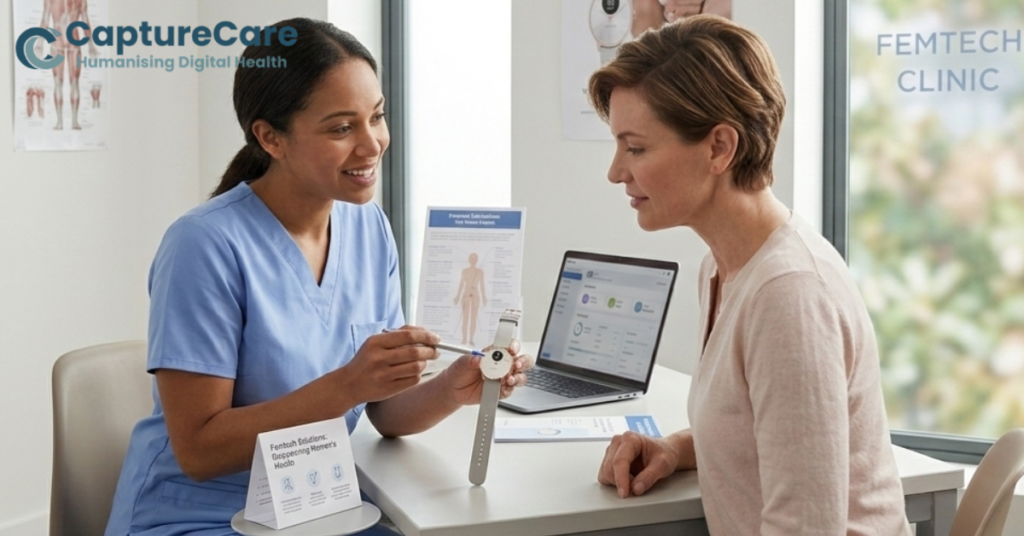
This is precisely the model that informed the development of CaptureCare, which uses devices from Withings, a global leader in consumer health technology, to deliver continuous, accurate monitoring data that can be reviewed and interpreted by CaptureCare's clinical team. The Withings device range is designed for everyday home use without clinical complexity, making it accessible for women who have never used health monitoring tools before.
You can learn more about the approach on the CaptureCare resources page or explore the full preventative remote patient monitoring programme to understand what structured, nurse-led monitoring looks like in practice.
Importantly, preventative monitoring is not about finding things wrong. It is about establishing a baseline, understanding what is normal for your body, and detecting meaningful deviations early while options are still broad and decisions are still choices rather than emergencies.
The Better Health Channel notes that many chronic conditions can be prevented or better managed when identified early. For midlife women, whose health risks shift considerably across the perimenopausal years, early identification is not just clinically useful; it is potentially life-changing.
Understanding Femtech Is the First Step
Femtech is not one product, one app, or one solution. It is a spectrum of tools and services, some of which are genuinely useful and some of which simply market wellness without delivering clinical substance.
For women in midlife, the most meaningful corner of this sector is the one that takes your health seriously, that uses validated devices, reviews your data with clinical expertise, and helps you understand your body at a time when understanding it has never mattered more.
Amelia Dickison, Founder, CaptureCare:
"Too many women reach their fifties without ever having had a thorough, continuous picture of their own health. Femtech at its best is not about tracking for tracking's sake; it's about giving women the information and the support to make genuinely informed decisions about the years ahead."
If you are a midlife woman who wants proactive, nurse-led monitoring that goes beyond a wellness app, explore CaptureCare's health support services and register your interest in the programme. Your health data should work for you and the right support makes that possible.