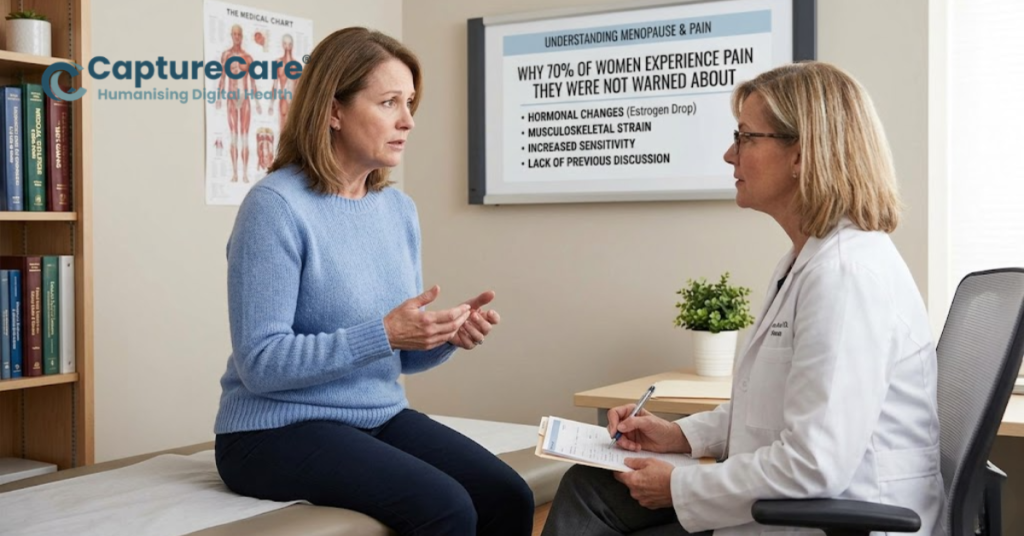
Why 70% of Women in Menopause Experience Pain That No One Warned Them About
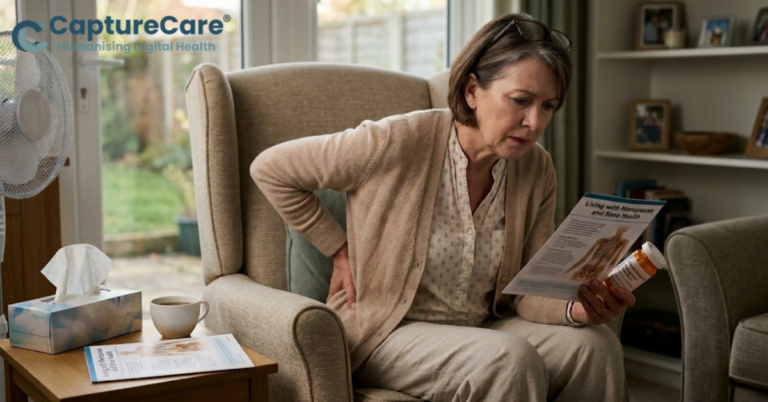
You wake up and your knees ache before you’ve even stood up. Your shoulders feel stiff by mid-morning. Your lower back has been grumbling for months, sometimes travelling down into your hips. You’ve put it down to ageing, to too much sitting, to the fact that you probably need to stretch more or move differently.
But what if the real explanation is something no one thought to mention?
Up to 70% of women going through menopause report musculoskeletal pain joint pain, muscle aching, back pain, neck stiffness, and tender knees. In the Women’s Health Initiative, one of the largest women’s health studies ever conducted, 77% of participants reported joint pain.
In some South-east Asian populations, joint pain is reported more frequently than hot flushes. Yet most women are never told that menopause joint pain is a recognised symptom, that it has a clear biological explanation, and that it is not something they simply have to endure.
This post is for every woman who has been told her pain is stress, posture, or just getting older. There is more to the story.
What Oestrogen Has to Do With Your Joints and Muscles
Oestrogen is commonly thought of as a reproductive hormone, but its reach in the body is far broader than most people realise. Oestrogen receptors are found throughout the musculoskeletal system in bone, cartilage, the synovial membranes that line your joints, muscle tissue, and tendons. When oestrogen levels begin to fall during perimenopause and menopause, every one of these structures is affected.
The synovial membranes, which produce the fluid that keeps joints cushioned and mobile, become less effective. Cartilage, which depends in part on oestrogen to maintain its integrity, becomes more vulnerable to breakdown. Tendons and muscles lose some of their natural resilience and elasticity. The result is a body that feels stiffer, more prone to aching, and slower to recover from physical activity not solely because of ageing but because of a specific, identifiable hormonal shift.
Researchers have named this cluster of symptoms the musculoskeletal syndrome of menopause. It encompasses joint pain (particularly in the hands, knees, hips, and spine), muscle aching, morning stiffness, and reduced physical capacity. A 2024 analysis published in the journal Climacteric confirmed that around 70% of menopausal women experience these symptoms, with approximately 25% describing the impact as disabling.
This is not an overreaction. This is biology.
It Can Start Earlier Than You Think
These changes do not wait until periods stop. For many women, musculoskeletal pain begins during perimenopause, the transitional phase that can begin in the early-to-mid 40s and last for several years before the final menstrual period. If you’ve noticed your body feeling different in ways that don’t quite fit other explanations, it may be worth considering whether hormonal change is a factor. Perimenopause brings a wider range of symptoms than most women expect and musculoskeletal pain is one of the most overlooked.
Why Menopause Muscle Pain and Joint Pain Are So Often Dismissed
There is a reason so many women end up cycling through physiotherapy appointments, anti-inflammatory medications, and rest without ever being offered an explanation that connects their pain to their hormones.
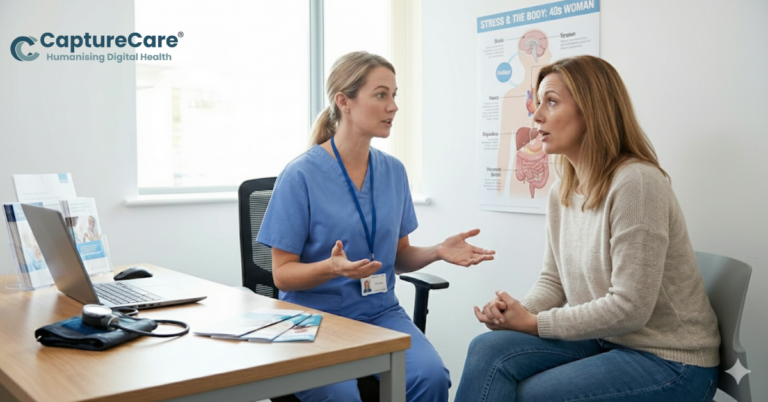
Musculoskeletal pain is not routinely included on standard menopause symptom checklists. When women present to their GP with joint pain or persistent muscle aching during midlife, it is frequently attributed to other causes: early arthritis, occupational strain, posture, anxiety, or simply the natural process of ageing. The hormonal connection is rarely the first thing explored.
This matters for several reasons. First, it means women can spend years in treatment for the symptom without understanding the underlying cause. Second, it can delay access to interventions that may help.
A 2025 systematic review examining data from nearly 3.96 million women found that hormone replacement therapy (HRT) was associated with improvement in musculoskeletal symptoms. However, the researchers also noted that there is currently no formal clinical guidance for using HRT specifically to address pain meaning many women are never offered it as an option.
Third, and perhaps most importantly, it reinforces a pattern that many midlife women encounter across the health system: pain that is real, documented, and affecting quality of life being attributed to factors that deflect from the underlying cause.
As Jean Hailes for Women’s Health notes, many symptoms of perimenopause and menopause go unrecognised not because they aren’t real, but because women often haven’t been told what to expect, and health professionals haven’t always been equipped to ask the right questions.
The “It’s Just Ageing” Problem
When women report joint or muscle pain in their 40s and 50s, they are disproportionately likely to be told it’s an expected part of getting older. While joint health does change with age, this framing closes off the hormonal dimension before it’s even considered. And when the hormonal dimension is never explored, treatment options that could make a genuine difference remain out of reach.
What Tracking Your Symptoms Over Time Can Change
One of the most useful things a woman can do during this phase of life is build a clear, consistent picture of how her body is changing not just at individual appointments, but across weeks and months.
Pain is notoriously difficult to describe in a single moment. It fluctuates. It moves. It worsens with stress, disrupted sleep, and hormonal shifts all of which are more common during menopause. Back pain and anxiety during midlife are frequently connected to the same underlying hormonal changes, but without long-term data, it’s nearly impossible to see that pattern clearly.
A single appointment with a GP, taken at one moment in time, rarely captures enough information to connect these dots. This is the gap that CaptureCare is designed to address.
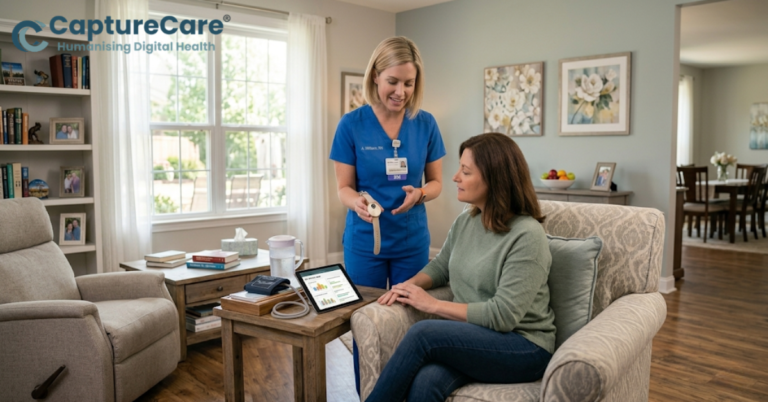
Through CaptureCare’s Preventative Remote Patient Monitoring (PRPM) programme, women can track health metrics continuously over time including physical symptoms alongside measurable data such as heart rate, blood pressure, sleep quality, and activity levels. Using Withings smart health devices, the programme captures the kind of longitudinal data that reveals patterns rather than snapshots.
When joint pain or muscle stiffness is tracked consistently, and that data is reviewed by a dedicated nurse practitioner who understands the full context of a woman’s health, the connections become visible. Pain that flares at particular points in the hormonal cycle, worsens alongside sleep disruption, or correlates with measurable changes in other metrics becomes something you can actually see and something you can present to your GP as real, documented evidence.
Why Longitudinal Data Matters
A one-off test or consultation tells you where you are today. Monitoring over time tells you what is actually happening, and whether things are improving, staying stable, or progressing in a direction worth investigating further. For musculoskeletal pain during menopause, this kind of long-term visibility can be the difference between a conversation that goes nowhere and one that opens the door to real support.
What to Look For and When to Seek Support
Not all joint or muscle pain during midlife is related to menopause, and it is always worth ruling out other causes. But certain patterns are worth noting and raising with your health professional.
Pay attention if you notice:
- Joint pain or stiffness that is new or worsening, and that began around the same time as other perimenopausal symptoms such as irregular periods, sleep changes, or mood shifts.
- Pain that moves around the body, or appears across multiple joints rather than in a single, consistent location.
- Significant morning stiffness that eases as the day progresses.
- Pain that is affecting your ability to exercise, work, or manage everyday activities.
- Standard treatments such as physiotherapy, anti-inflammatory medication, or rest that provide only partial or temporary relief.
These patterns don’t confirm a menopause connection, but they do make it worth raising with a health professional who will take the possibility seriously. Healthdirect Australia provides guidance on when to seek care for joint pain and how to distinguish between different types of joint conditions, a useful starting point before your next GP visit.
When you do see your GP, it is worth asking directly about the hormonal dimension, particularly if you are in your 40s or 50s and your pain emerged around the same time as other changes. You may need to raise it explicitly. Having documented data, even informal notes, about when pain worsens and what else is happening in your body at the same time can make that conversation more productive.
“So many women come to us having spent years being told their pain is stress, or posture, or just part of getting older,” says Amelia Dickison, founder of CaptureCare. “What they needed was someone tracking the full picture over time, and a nurse who could help them see what that data was actually telling them. When women have that kind of consistent, informed support, they stop second-guessing themselves and start getting answers.”
If you are experiencing joint pain, muscle aches, or body stiffness that does not have a clear explanation, you do not have to accept it as your new normal. CaptureCare’s waitlist is now open. Join today to be among the first women to access nurse-led, continuous health monitoring designed specifically for midlife and start building the data that helps you get the care you deserve.

The Author
Amelia Dickison
On a mission to stop the stoppable and prevent the preventable when it comes to our health and happiness
🙌 Start Your Health Journey Today
Whether you’re 40, 60 or 80, stroke doesn’t discriminate — but knowledge gives you the upper hand. The Stroke Risk Test is available right now through CaptureCare, your partner in preventative health and wellness.
💡 Share your results with your GP and start your wellness plan today. Because when it comes to stroke, the best treatment is prevention.