2026 Is the Year Midlife Women’s Health Stops Being Invisible
You are somewhere in your forties or fifties, balancing work, relationships, and the needs of those around you. At the same time, your body begins to change in ways that feel hard to explain, track, or fully understand.
You visit your GP, go through the usual checks, and are told that your results are normal. On paper, everything looks fine, yet you do not feel fine. That gap between what is measured and what you experience can leave you feeling dismissed or uncertain about what is really happening.
This is not a personal failure. It reflects a healthcare system that has not been built to fully support the complexity of women’s health in midlife. In 2026, that is starting to shift, and more attention is finally being given to what women experience during this stage of life.
The Global Case for Women’s Health in 2026 Is Too Large to Ignore
The case for women’s health is now too large to dismiss. The McKinsey Health Institute estimates that closing the women’s health gap could add around USD 1 trillion to the global economy each year by 2040, showing that this is not just a personal health issue but a major economic one as well.
Investment data tells a similar story. The World Economic Forum’s 2026 Women’s Health Investment Outlook reports that women’s health receives just 6% of private healthcare investment, despite women and girls making up nearly half of the world’s population. The report also notes that major unmet needs remain in areas such as cardiovascular disease, osteoporosis, menopause, and Alzheimer’s disease, which helps explain why midlife women’s health is finally drawing more serious attention.
The menopause conversation is changing too. More recent research describes the menopause transition as a critical stage for long-term health, with effects that extend beyond symptoms like hot flushes or sleep disruption to include cardiovascular, metabolic, and emotional health.
A 2026 UBS report reinforces this broader view, arguing that women’s health inequalities affect not only wellbeing but also work, income, and long-term financial security. Taken together, the direction is clear: women’s health cannot be approached as a few isolated appointments. It needs to be understood across the full span of a woman’s life, especially in midlife when many of these risks begin to accelerate.
What Australian Women Are Actually Experiencing
Across Australia, more women in midlife are speaking openly about symptoms that feel disruptive, persistent, and difficult to explain. From sleep changes and low energy to mood shifts and brain fog, these experiences are common, yet many women still struggle to understand them, lacking sufficient support and clear answers.
1. Midlife Symptoms Are Real and Widespread
The conversation around women’s health may be changing globally, but for many Australian women in midlife, the lived experience still feels confusing, under-explained, and too often dismissed. The Australian Women’s Midlife Years (AMY) Study led by Monash is helping change that.
With more than 8,000 women aged 40 to 69 included, it is one of the most comprehensive Australian studies of menopause and midlife health to date, and it is reinforcing what many women have known for years: these symptoms are real, varied, and significant.
2. The Impact Goes Far Beyond Hot Flushes
Midlife health changes do not stop at a few headline symptoms. Jean Hailes notes that perimenopause and menopause can affect sleep, mood, concentration, muscle and joint comfort, heart symptoms such as palpitations, and overall day-to-day wellbeing. For many women, this is not a minor inconvenience. It can affect how they work, how they relate to others, and how they feel in their own bodies from one week to the next.
3. Preventative Care Still Has Gaps
Despite this, preventative care in midlife remains inconsistent. Australian research published in the Medical Journal of Australia notes that preventive health checks for women during midlife are available, but they are limited and often tied to narrow eligibility criteria rather than the broader health picture many women are actually navigating. That means results can still arrive as isolated snapshots, with little follow-up and not enough attention to patterns developing over time.
4. Many Women Are Still Left to Connect the Dots Alone
This is the gap that so many midlife women recognise immediately. Symptoms overlap, risks shift, and the full picture is rarely captured in one short appointment. That is why the growing focus on menopause research and more continuous models of women’s healthcare matters so much in Australia right now. It reflects a long-overdue move towards taking women’s midlife health seriously, not occasionally, but consistently.
5. The Health Risks That Get Missed Most Often
For many midlife women, the most important health changes are not always the most obvious ones. Some risks build gradually in the background, while attention stays focused on more immediate symptoms such as hot flushes, poor sleep, or irregular periods. This can make it easier for important warning signs to be missed or brushed aside during a busy stage of life.
Three areas are particularly prone to being overlooked in midlife women:
- Cardiovascular health: Women’s heart disease risk rises significantly after menopause, yet women are still less likely than men to receive timely cardiovascular screening or early intervention.
- Bone density: Oestrogen plays a key protective role in bone health. As levels decline during perimenopause and menopause, the risk of osteoporosis rises quietly, often without obvious symptoms until a fracture occurs.
- Mental health and cognition: Mood changes, brain fog, and heightened anxiety during perimenopause are frequently dismissed or attributed to external stress. The hormonal basis for these experiences remains underrepresented in routine general practice.
These risks matter because they affect far more than short-term comfort. They can shape long-term health, confidence, and quality of life in ways that are easy to underestimate when no one is looking at the full picture.
Why Monitoring Is the Missing Piece in Midlife Women’s Health
The shift from reactive to preventative healthcare is not a new concept. But for midlife women, it has rarely been implemented with the continuity and rigour it requires.
The truth is that preventative health for women in midlife is not about guesswork. It is about having enough data, collected consistently over time, to understand what is normal for your body and to notice when something begins to shift. A single blood pressure reading at an annual GP appointment tells you very little on its own. A pattern of readings tracked across months, in your home environment, in the context of your real daily life, tells you a great deal more.
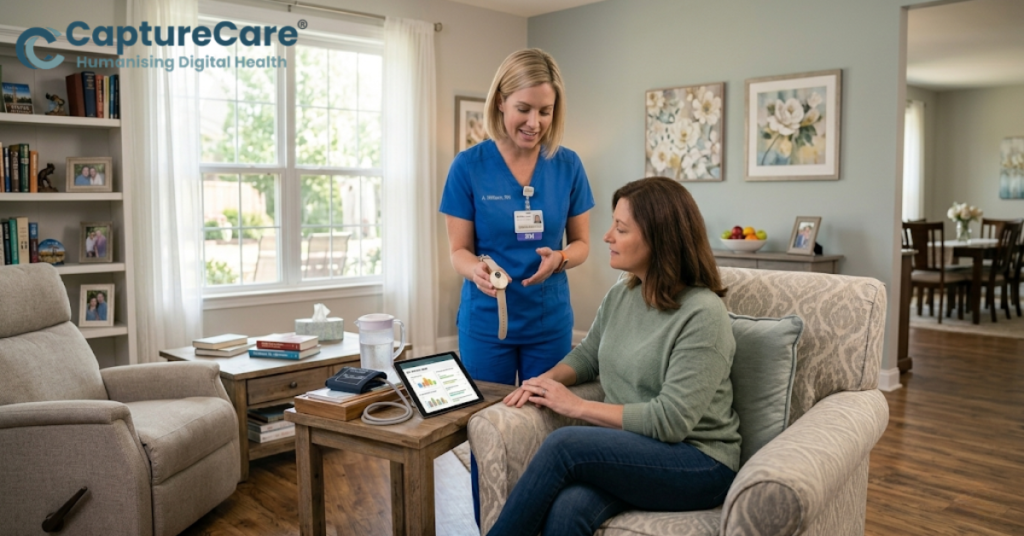
This is the clinical logic behind continuous health monitoring, and why femtech in Australia is increasingly being taken seriously in both preventative and clinical health settings. Through its partnership with Withings, CaptureCare supports clients to track meaningful health metrics using medical-grade smart devices, integrating real data from everyday life into a broader picture of midlife health. Rather than relying on isolated snapshots, this approach is designed to surface patterns, identify early shifts, and flag changes before they become problems requiring urgent intervention.
This is not technology for its own sake. It is a direct response to a genuine and well-documented gap in the way Australian women’s health has historically been monitored and managed.
What the Evidence Says About Acting Early
Research consistently shows that lifestyle factors, when identified and addressed early, can meaningfully reduce the risk of cardiovascular disease, type 2 diabetes, and other chronic conditions that are more likely to emerge during and after menopause.
The goal is not to medicalise every aspect of midlife. It is to give women the information they need to make informed decisions about their health, with clinical support guiding the interpretation of that information.
Early awareness is not the same as early alarm. When data is collected consistently and interpreted by someone with clinical training, it becomes a tool for calm and clarity rather than anxiety. That is a very different experience from receiving a single test result with no context and no follow-up.
What This Shift Means for You Right Now
The global momentum around women’s health in 2026 is genuinely encouraging. But research and policy change take time to reach individual women in their forties and fifties who are managing real symptoms and real lives today. You do not have to wait for the system to fully catch up.
There are practical steps you can take right now:
- Track more than one number: Blood pressure, resting heart rate, sleep quality, and weight trends are all pieces of a larger picture. Looking at each in isolation is far less useful than understanding how they move together over time.
- Notice patterns, not just symptoms: If you are experiencing mood changes, fatigue, or persistent brain fog, keep a simple record over several weeks. A documented pattern is far easier to act on than a vague description shared during a brief clinical appointment.
- Ask for more at your next check-up: You are entitled to request a more comprehensive midlife health review from your GP, including screening for cardiovascular risk factors and bone density where appropriate.
- Find support that watches the whole picture: Access to nurse-led, continuous health monitoring is becoming more widely available in Australia, and it is designed specifically for this phase of life.
The CaptureCare PRPM Programme was built on exactly this premise: that midlife women deserve consistent, clinically informed support across the full arc of their health, not a series of appointments that treat each result in isolation without ever connecting the dots.
A Turning Point Worth Paying Attention To
“The women we work with are not asking for anything extraordinary,” says Amelia Dickison, founder of CaptureCare. “They are asking to be seen clearly and to have someone watching the pattern with them over time. That is what preventative care should look like for women at this stage of life. The research is finally catching up to what these women have known about their own bodies for years.”
The shift happening in menopause innovation and women’s health investment globally is significant. But the most meaningful change will not be felt in boardrooms or policy documents. It will be felt by midlife women who finally have access to health monitoring that takes them seriously, tracks the right things consistently, and supports them to make informed decisions.
If you are ready for that kind of care, you are welcome to join the waitlist and be among the first to access a programme designed specifically for this stage of life.

The Author
Amelia Dickison
On a mission to stop the stoppable and prevent the preventable when it comes to our health and happiness
🙌 Start Your Health Journey Today
Whether you’re 40, 60 or 80, stroke doesn’t discriminate — but knowledge gives you the upper hand. The Stroke Risk Test is available right now through CaptureCare, your partner in preventative health and wellness.
💡 Share your results with your GP and start your wellness plan today. Because when it comes to stroke, the best treatment is prevention.