
The Women’s Health Gap: Why Closing It Could Be Worth $1 Trillion
Many midlife women know the feeling of showing up to a doctor’s appointment with months of symptoms, only to leave with little clarity and a suggestion to wait and see. That experience is not just frustrating on a personal level. It reflects a much bigger issue: a global women’s health gap that has shaped how medicine is researched, funded, and delivered for decades.
A major 2024 report by the McKinsey Health Institute and the World Economic Forum found that women spend 25% more of their lives in poor health than men. That gap adds up to years of pain, lost productivity, and unmet need that often go unseen within healthcare systems.
The encouraging part is that momentum is growing to change this. For Australian women in midlife, understanding the gap is an important first step towards asking for better care.
What Is the Women’s Health Gap?
The women’s health gap describes the disparity between how women actually experience ill health over their lives and how well our medical systems recognise, research, and respond to it.
It’s not simply that women are sicker. In fact, women live longer than men on average. But length of life and quality of life are very different things. According to the McKinsey Health Institute, more than half of women’s lost healthy years occur between the ages of 20 and 60, precisely the period when most women are in the workforce, raising families, and building careers.
The economic consequences are staggering. Closing the women’s health gap could generate up to $1 trillion USD in economic growth annually. The return on investment is compelling: for every $1 invested in women’s health, an estimated $3 is projected back into the broader economy.
The Research Gap
One reason this gap persists is that women have historically been underrepresented in medical research. A 2026 WEF Women’s Health Investment Outlook report found that women make up just 22% of Phase I clinical trial participants, despite representing roughly half the global population. Only 6% of private healthcare investment is directed specifically at women’s health.
This creates a compounding problem. When women’s bodies aren’t adequately studied, the treatments and diagnostic criteria developed from that research are shaped by male physiology. Women then present with symptoms that don’t match the textbook picture and are often undertreated, misdiagnosed, or dismissed altogether.
Why the Women’s Health Gap Is So Easy to Miss
Part of what makes this gap so persistent is that it doesn’t always look like neglect. On the surface, women tend to access healthcare more often than men. They attend more GP appointments, fill more prescriptions, and are generally more engaged with the healthcare system. So the assumption has long been that women’s health needs are being addressed.
But accessing the system and receiving effective care are two different things. As the UBS Women and Health report (2026) argues, women’s health is not episodic. It is longitudinal. It unfolds across a lifetime and is deeply interconnected across systems: hormonal, cardiovascular, metabolic, and mental.
Midlife as a Critical Turning Point
For Australian women, midlife is often where the women’s health gap becomes most visible. The perimenopause and menopause transition can last for years and bring a wide range of physical, cognitive, and emotional changes. Research published in the Medical Journal of Australia found that more than 85% of Australian women with bothersome menopausal symptoms are not receiving effective, approved treatment. This points to a gap that is not just about symptoms themselves but about how consistently and confidently they are recognised and managed in care.
This matters far beyond hot flushes and poor sleep. During the menopause transition, cardiovascular risk, bone loss, and metabolic health can all begin to shift in ways that affect long-term wellbeing. When those changes are not tracked properly, small departures from a woman’s usual baseline can build quietly over time. The gap, in other words, is not always about getting access to a GP. It is about whether the care a woman receives reflects what is actually happening in her body.
You can read more about why single-point assessments often miss the bigger picture in your midlife health needs patterns, not snapshots.
What Monitoring and Awareness Can Actually Do
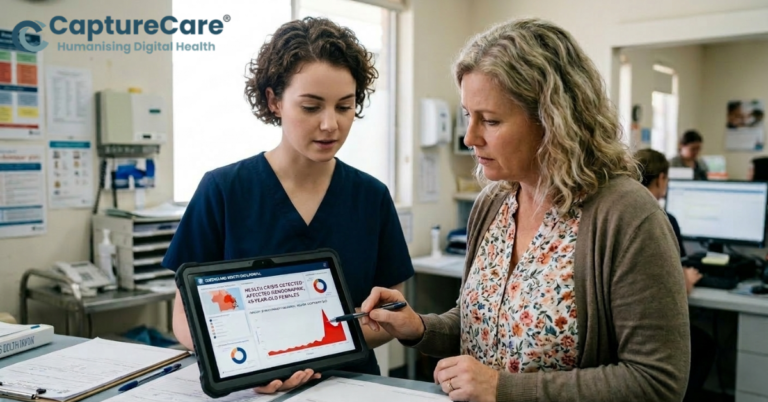
There is a real difference between feeling that something is off and being able to point to clear changes over time. For midlife women, that difference matters. In a healthcare system that still relies heavily on short, isolated appointments, longitudinal monitoring can make patterns more visible and conversations more productive.
The idea is simple: when you track how your body behaves over time, you get a clearer picture of what is normal for you. That might include resting heart rate, blood pressure, sleep quality, energy, or weight trends. Once you know your usual baseline, smaller shifts become easier to spot early rather than only being noticed once symptoms become harder to ignore.
| Health measure | What it can help reveal over time | Relevance during midlife |
| Resting heart rate | Ongoing stress, poor recovery, or changes in fitness | Can signal broader changes in physical strain and recovery |
| Blood pressure | Gradual upward trends rather than one-off spikes | Helps show early movement in cardiovascular health |
| Sleep quality | Repeated disruption, lighter sleep, or poor recovery | Can reflect changes that affect mood, focus, and energy |
| Weight trends | Slow changes that may reflect hormonal or metabolic shifts | Makes gradual body changes easier to notice and discuss |
| Symptom tracking | Recurring issues such as brain fog, joint pain, or fatigue | Gives symptoms more context across time, not just in one appointment |
That fuller picture is often what makes the difference. Instead of relying on memory or trying to explain months of symptoms in a few minutes, you can point to patterns, timing, and change. That makes it easier to recognise when something is shifting and to seek support before those changes build into a larger problem.
Prevention Over Reaction
The women’s health gap is also a prevention gap. Care often starts only once symptoms become harder to ignore, rather than when early changes first appear. For midlife women, that matters. Cardiovascular, metabolic, and hormonal risks can all shift during this stage of life, and without ongoing attention, those changes are easy to miss.
That is why prevention matters. Tracking health patterns over time can make smaller changes easier to spot earlier, creating more chances to ask questions, seek support, and act before problems become more serious.
Wearable health technology plays a growing role here. CaptureCare’s partnership with Withings smart health devices allows women to capture daily biometric data in a clinically meaningful way, feeding into a picture of health that builds in richness over time rather than existing only as a single measurement taken at a GP appointment.
For many women, understanding what happens in the space between appointments is where real health awareness begins.
What You Can Do Right Now
Closing the global women’s health gap will take policy change, better research funding, and stronger industry commitment. But at an individual level, there are still practical steps that can help you better understand your health and speak up for the care you need.
- Track your baseline: Blood pressure, resting heart rate, sleep quality, and energy levels can all shift over time. Knowing what is normal for you makes it easier to notice when something starts to change.
- Keep a symptom diary: Brain fog, joint pain, mood changes, poor sleep, and fluctuations in energy may seem unrelated at first. When you record them over time, patterns often become much clearer.
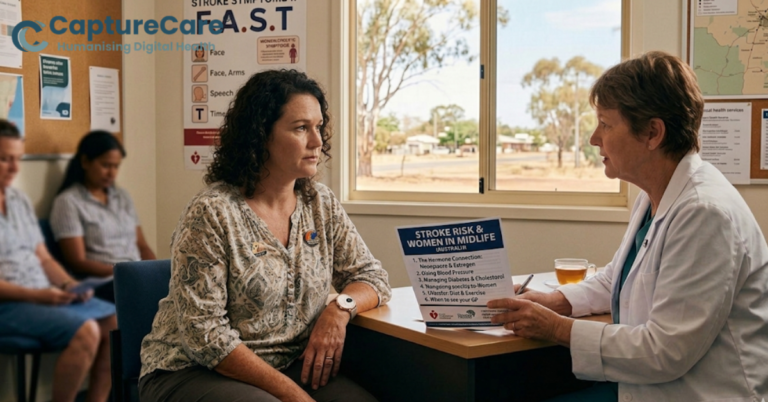
- Ask direct questions: If you are in your 40s or 50s and dealing with symptoms that feel unexplained, raise the possibility of perimenopause or menopause with your GP and ask what assessments may be relevant for your situation.
- Advocate for care that continues over time: One appointment only shows a moment. Follow-up, ongoing monitoring, and a clearer view of your health across weeks and months can lead to more informed decisions.
The more clearly you can describe patterns, changes, and concerns, the easier it becomes to have productive conversations with your healthcare team.
It’s Time for Health That Keeps Up With You
The women’s health gap is not inevitable. It is the product of decades of underinvestment, narrow research, and a system designed around episodic rather than continuous care. For midlife Australian women, the consequences are real. But so is the momentum building to change them.
Amelia Dickison, founder of CaptureCare, put it this way:
“Women deserve health support that is as continuous as their lives. One appointment per year is not monitoring. It is a snapshot. Real health awareness requires patterns, data, and a care model built around the woman, not the appointment schedule.”
If you’re ready to move beyond snapshot health and into something more meaningful, explore CaptureCare’s preventative health monitoring programme for midlife women. Early access places are available for women who want to start building their personal health picture today.

The Author
Amelia Dickison
On a mission to stop the stoppable and prevent the preventable when it comes to our health and happiness
🙌 Start Your Health Journey Today
Whether you’re 40, 60 or 80, stroke doesn’t discriminate — but knowledge gives you the upper hand. The Stroke Risk Test is available right now through CaptureCare, your partner in preventative health and wellness.
💡 Share your results with your GP and start your wellness plan today. Because when it comes to stroke, the best treatment is prevention.