
Are Antidepressants Being Prescribed Instead of HRT? What Australian Women Need to Know
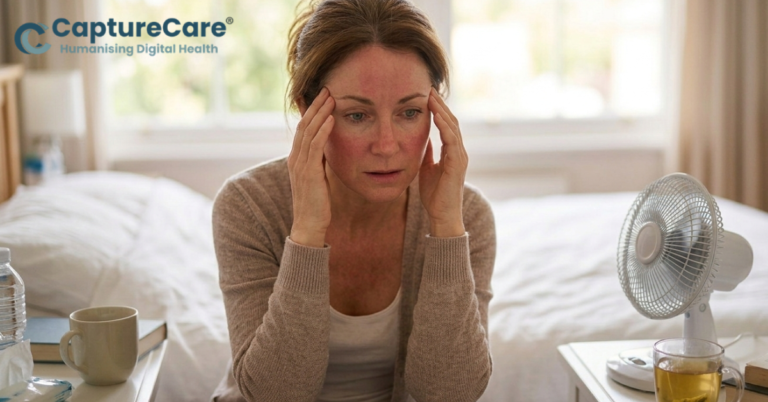
You go to your GP feeling exhausted, flat, and unlike yourself. Maybe your sleep is broken, your patience is shorter than usual, and a low-level sadness seems to have moved in and made itself comfortable. Your GP listens, nods, and reaches for the prescription pad. A few moments later, you leave with a script for an antidepressant.
For many Australian women in their 40s and 50s, this scenario is familiar. What is less familiar is the conversation that should perhaps have come first: one about perimenopause, hormonal shifts, and whether antidepressants are being prescribed instead of HRT.
A significant study published in 2025 is now adding weight to a concern that clinicians and women’s health advocates have raised for years. The findings deserve careful attention, and so does the broader question of how mood symptoms in midlife are being identified, understood, and treated in Australia.
What the 2025 Research Found
Published in the Journal of Sexual Medicine and presented at the International Society for the Study of Women’s Sexual Health (ISSWSH), the Quaile et al. cross-sectional study looked at 1,081 perimenopausal and postmenopausal women who were taking antidepressants or anxiolytics at the time they first attended a specialist menopause clinic in the UK.
After starting hormone replacement therapy (HRT), the women were followed up at three months to see whether their medication use had changed. The results were notable: 39 per cent of the 1,081 women either reduced or discontinued their antidepressant medication after starting HRT.
When testosterone was added to standard HRT, the effect appeared even more pronounced. Among women receiving HRT with testosterone, the discontinuation rate was statistically higher than in those receiving standard HRT alone.
The study authors concluded that, for some women, HRT may be a more appropriate treatment for menopausal mood symptoms and could avoid the need for, or enable the deprescribing of, medications that carry a risk of side effects with long-term use. Deprescribing simply means the careful, supervised reduction or cessation of a medication that is no longer necessary or appropriate.
It is worth noting that this was a cross-sectional study conducted in a specialist clinic setting, which means it captures a snapshot rather than a controlled trial. The findings are a prompt for important conversations, not a directive to stop any medication without medical guidance.
Why Mood Symptoms in Midlife Are So Often Misread
Perimenopause can shift mood, sleep, and stress tolerance in ways that feel a lot like depression or anxiety. The problem is not that symptoms are not real. The problem is that the cause is easy to miss when hormones, life stress, and poor sleep stack up at the same time.
1. Hormone Shifts Can Feel Like A Mental Health Spiral
Oestrogen and progesterone changes can affect mood regulation, sleep quality, and how reactive you feel day to day. That can show up as tearfulness, irritability, anxiety, a flat mood, or feeling emotionally fragile. If the appointment focuses only on mood, the hormonal piece can get missed, especially when physical symptoms are not discussed.
2. Perimenopausal Depression Can Look Identical to Clinical Depression
Monash University’s HER Centre Australia notes that around 40 per cent of women presenting to menopause services report depressive symptoms. For many women, the experience feels like classic depression, but the timing and pattern can be different. Symptoms may flare alongside cycle changes, worsen with night sweats, or appear for the first time in the midlife years, which can point to a hormonal driver that needs to be assessed.
3. Appointments Often Capture A Snapshot, Not The Pattern
Midlife symptoms rarely stay consistent. Sleep might be fine one week and wrecked the next. Mood can lift after a good night, then crash after a run of night sweats. In a short GP visit, it is easy to label the most obvious issue in front of you. Without a record of symptoms over time, the hormonal pattern can look like general stress or a primary mood disorder.
4. Vasomotor Symptoms Can Quietly Drive Low Mood
Hot flushes and night sweats do more than feel uncomfortable. They disrupt sleep and can raise stress levels, which can then feed anxiety, low mood, brain fog, and low motivation. The Medical Journal of Australia notes women with moderate to severe vasomotor symptoms are almost three times more likely to experience moderate to severe depressive symptoms. When sleep improves, mood often follows, which is why treating the whole symptom cluster matters.
5. Menopause Care is Still Uneven, So Treatment Can Default to What is Familiar
The Medical Journal of Australia has highlighted gaps in menopause management in Australian primary care, including limited confidence and training across clinicians. When that happens, antidepressants can become the default response to mood complaints, even when perimenopause should be part of the assessment. This is not a criticism of GPs. It is a system issue that can leave women on a plan that does not match the root cause.
If this topic feels familiar, the post on how life stress shows up in the body over time adds context on how hormonal and physiological changes can overlap in midlife.
Why Tracking Matters: The Space Between Symptoms and Answers
When symptoms fluctuate, a single appointment can miss the pattern. Tracking helps you show what has changed over time.
The Problem With Episodic Care
Hormone-related mood changes often shift with sleep, stress, cycle timing, and daily load. A short GP visit captures one moment. If it is a better day, symptoms can seem minor. If it is a crash day, the plan can focus on mood alone without the wider context.
Tracking over a few weeks can reveal links that matter, such as mood dips after night sweats, anxiety after broken sleep, or symptoms that cluster around cycle changes. Jean Hailes for Women’s Health notes menopause is highly individual and symptoms can shift across the perimenopausal years, which makes a consistent record more useful than recall.
| What to track | What it can show | Why it helps |
| Mood and anxiety (daily 1–10) | Cyclical dips vs constant low mood | Clarifies timing patterns |
| Sleep and wake-ups | Links between poor sleep and mood | Shows sleep as a driver |
| Hot flushes and night sweats | Flare periods and severity trends | Supports vasomotor treatment discussions |
| Cycle timing and changes | Missed periods and symptom clustering | Flags perimenopause patterns |
| Resting heart rate or HRV | Stress load and recovery shifts | Adds objective context |
| Alcohol, caffeine, exercise, stressors | Triggers that worsen symptoms | Guides practical adjustments |
Bring this summary to your appointment in a simple note. Include when symptoms started, what makes them worse, and what improves them. Even two to four weeks of tracking can help your GP decide whether perimenopause needs to be assessed alongside mental health and what the safest next step looks like for you.
How Wearable Data Adds Another Layer
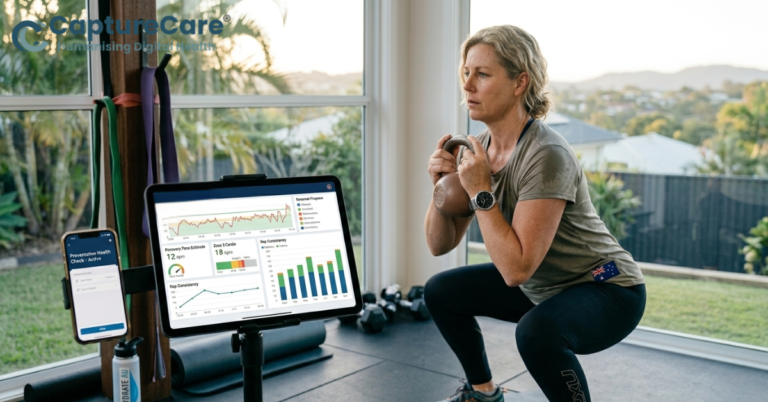
Smart health devices from Withings can capture objective health metrics such as sleep stages, resting heart rate, heart rate variability, and activity patterns continuously over time. These metrics do not diagnose perimenopause or any mood condition, but they can help illuminate the connections between physiological changes and how a woman is feeling day to day.
When a woman can walk into a GP appointment with months of tracked sleep data, mood patterns, and cardiovascular metrics rather than a generalised sense of “I’ve been feeling off for a while,” the conversation about what is actually happening and what treatment might be appropriate is fundamentally different. It shifts from guesswork to evidence. The post why midlife health needs monitoring, not guesswork explains the case for this approach in more detail.
What to Do If You Think Your Mood Symptoms Might Be Hormonal
If you are in your 40s or 50s and have been prescribed antidepressants for mood-related symptoms without a discussion about perimenopause, it may be worth initiating that conversation with your GP or seeking a referral to a practitioner with menopause expertise.
There are several things that can help you prepare for that conversation:
- Track your symptoms over time. Note mood changes, sleep quality, hot flushes, cycle irregularity, and any other physical symptoms. Look for patterns across weeks rather than days.
- Be specific with your GP. The Healthdirect Australia symptom checker and menopause resources can help you articulate what you are experiencing before your appointment.
- Ask about menopause specifically. Request that perimenopause be considered as part of your assessment, particularly if you are between 40 and 55 and experiencing a cluster of physical and psychological symptoms.
- Do not stop any medication without medical supervision. If you are currently taking antidepressants and wonder whether they are the right treatment for you, have that conversation with your prescribing doctor. Stopping antidepressants abruptly can cause withdrawal symptoms and should always be guided by a health professional.
The Royal Australian College of General Practitioners (RACGP) provides clinical guidance for GPs on menopause management, and awareness of updated guidelines is growing. If you feel your current practitioner is not confident with menopause, asking for a referral is a reasonable and appropriate step.
For more on how the body changes in ways that often go unacknowledged, The health changes no one warns you about in midlife is worth a read.
You Deserve an Informed Conversation About Your Health
Antidepressants are an important and effective treatment for many people. This is not an argument against them. What the 2025 Quaile research highlights is that some perimenopausal women may be receiving them when HRT would be a more appropriate first step, and that addressing the hormonal root cause can, for a significant proportion of women, reduce or eliminate the need for antidepressant therapy altogether.
The gap in Australian menopause care is real, and it has consequences for women who are trying to understand what is happening in their own bodies. Knowing your patterns, tracking your data, and walking into a GP appointment prepared is one of the most powerful things you can do.
Amelia Dickison, founder of CaptureCare, puts it simply:
“Women in midlife are often told their symptoms are stress, or anxiety, or simply part of getting older. But when you start monitoring the full picture of your health over time, patterns emerge that tell a very different story. That data gives women a voice in their own care that they did not have before.”
If you would like to learn more about how nurse-led preventative health monitoring can support you through midlife, visit the CaptureCare Health Support Services page or join the waitlist today.

The Author
Amelia Dickison
On a mission to stop the stoppable and prevent the preventable when it comes to our health and happiness
🙌 Start Your Health Journey Today
Whether you’re 40, 60 or 80, stroke doesn’t discriminate — but knowledge gives you the upper hand. The Stroke Risk Test is available right now through CaptureCare, your partner in preventative health and wellness.
💡 Share your results with your GP and start your wellness plan today. Because when it comes to stroke, the best treatment is prevention.