
Your Midlife Health Needs Patterns, Not Snapshots
There is something quietly frustrating about leaving a medical appointment without clear answers. You arrived with a list of things you had noticed over recent weeks: disrupted sleep, a resting heart rate that felt higher than usual, and fatigue that rest alone did not resolve. You left with a referral, a pamphlet, or perhaps just reassurance that your blood work looked fine.
Your blood work probably did look fine. But “fine” at a single point in time is not the same as understanding what is actually happening to your body across weeks and months. This is the core limitation of episodic care for midlife women: it captures a snapshot when what you actually need is a pattern.
What Changes in Midlife and Why It Is Difficult to Measure
From the early 40s onward, oestrogen and progesterone levels do not decline in a smooth, predictable curve; they fluctuate erratically, with direct effects on sleep architecture, cardiovascular function, stress regulation, and mood.
Sleep is a clear example. Data from the Study of Women’s Health Across the Nation (SWAN) found that 40 to 56 per cent of women report sleep difficulties during peri- and post-menopause, and a 2024 review in Frontiers in Sleep confirmed that up to 26 per cent develop chronic clinical insomnia after menopause.
The problem is that these symptoms are not constant; sleep disruption peaks, briefly improves, then worsens again. Stress and hormonal phases cause a shift in the resting heart rate. A blood pressure reading at one appointment may look unremarkable, while readings across four weeks could reveal a trend worth clinical attention. None of this is visible in a single consultation.
The Problem With Snapshots
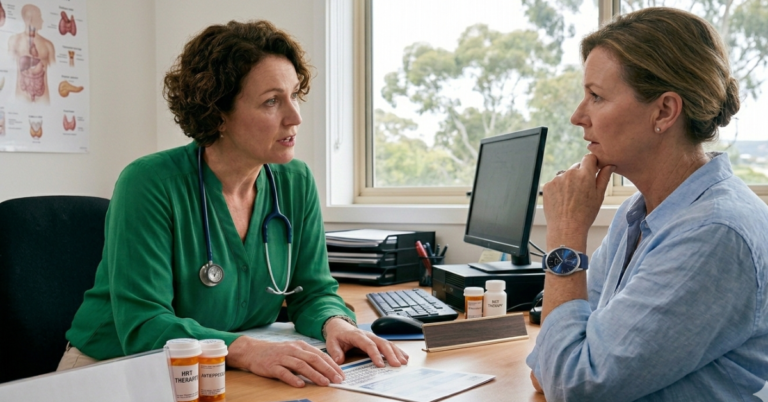
Traditional care is structured around appointments. You come in, data is collected at that moment, and clinical decisions are based on what is present in the room. This model works well for many conditions, but it is structurally misaligned with the kind of health changes that midlife women experience.
Research consistently shows that women’s symptoms are more likely to be dismissed or misdiagnosed than men’s, in part because they are variable, cyclical, and difficult to capture in a single clinical encounter.
- Women are 66 per cent more likely to receive a medical misdiagnosis than men, in part because their symptoms are variable, cyclical, and difficult to capture in a single clinical encounter.
- Half of 3,000 women surveyed by Withings wanted more help understanding their symptoms and physiological changes, and doctors had not been the primary source filling that gap. This helps explain why so many women feel fine but not well, especially during midlife, when symptoms often do not appear clearly in a single appointment.
This is not a failure of individual practitioners. It is a structural problem. When the system only sees you twice a year, it cannot see your patterns. And without patterns, clinical interpretation is limited.
Data as Agency: But Only With Interpretation
Understanding your health data is only useful when it is connected to consistent clinical oversight. Here is why both elements matter.
The Power of a Continuous Record
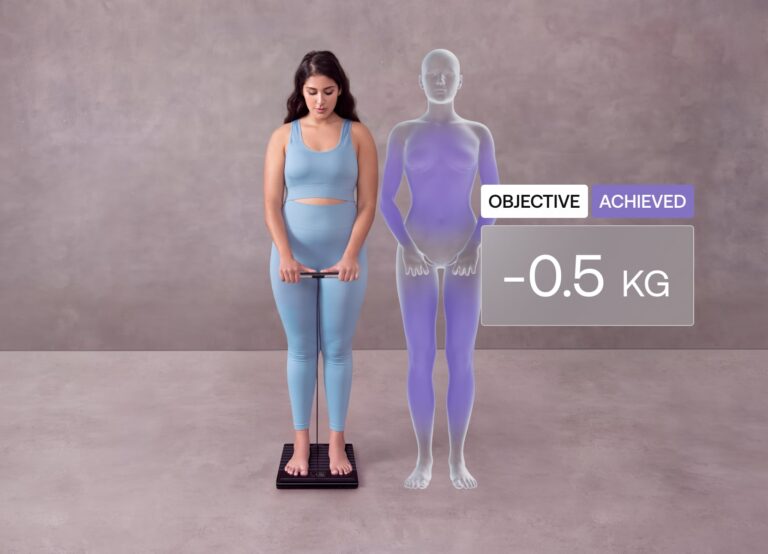
There is a growing recognition that wearable devices and connected health tools give women something they have not historically had: a continuous record of their own physiology. Sleep staging, resting heart rate, blood pressure trends, and heart rate variability – these can now be tracked outside of clinical settings, across days and weeks, building a picture that is far richer than any single appointment could produce.
Tracking as a Clinical Conversation Starter
When you have an ongoing, objective record of your own health, the clinical conversation changes your symptoms are no longer easy to dismiss. They are in your data, not just in your memory.
Why Interpretation Is the Missing Piece
But data without interpretation is not care. It is noise. A graph of resting heart rate across 30 days means something specific to a clinician trained to read it within the context of hormonal changes, stress patterns, and cardiovascular risk. Without that trained eye and that ongoing relationship, a woman reviewing her own data can feel more confused than informed. This is the gap that technology alone cannot close.
Connected Continuous Care: What It Actually Means
Connected continuous care is more specific than remote monitoring. It is a coordinated approach where data collection, clinical oversight, and human communication work together as a joined system. Data is tracked across time and interpreted by a clinician who knows your history and your context.
In practice, this means a registered nurse reviewing your health data on an ongoing basis, identifying changes in your health trends over time, and reaching out when something warrants a conversation. The clinician sees your patterns, not just your snapshots.
This matters because so much of what is clinically relevant is not dramatic. It is the gradual shift in sleep quality over a month. It is the resting heart rate trending upward for three weeks. It is the blood pressure reading that is borderline once and elevated four times. These are the data points that episodic care misses and that, when interpreted across time, give a far clearer clinical picture.
What This Looks Like in Practice
CaptureCare, working in partnership with Withings, a leader in clinical-grade connected health devices, puts this model into practice.
As CaptureCare founder Amelia Dickison explains, “Women are generating more health data than ever, but often without continuity, clinical context, or human support, especially during midlife transitions.”
Withings devices capture continuous health metrics from daily life, reviewed regularly by registered nurses trained in the physiological changes specific to midlife. It is not about alerts and alarms. It is about a nurse who sees your patterns across weeks and months and knows when something needs attention.
If you are considering this kind of approach, keep these in mind:
- Consistency matters more than intensity: Wearing a device daily for three weeks gives your nurse far more to work with than wearing it intensively for a few days. Steady, everyday data is what makes patterns visible.
- Context adds value to data: If your sleep was disrupted by a stressful week or a change in routine, jot it down. That context helps your nurse build a much clearer picture of what is hormonal and what is circumstantial.
- Focus on the trend, not the number: One reading on one day does not tell you much. Ask your nurse what your data has looked like over the past four to eight weeks — that longer view is where meaningful patterns become visible.
- Start before symptoms become disruptive: This kind of monitoring works best as a preventive tool. The earlier a pattern is identified, the more options you have for responding to it.
Your data becomes meaningful when it is consistent, contextualised, and reviewed by someone trained to interpret it within the full picture of your health.
A Different Kind of Care
Midlife is not a diagnosis. It is a transition, and transitions are, by nature, processes rather than events. Your health during this period deserves to be understood as a process: observed over time, interpreted by someone who knows your history, and responded to in a way that reflects your actual patterns rather than a single moment in the clinic.
If you are a woman in midlife who has felt dismissed, confused, or unsure how to make sense of what your body is doing, connected continuous care offers a different answer. This is not because the technology is new, but rather because consistent, nurse-led interpretation of your data over time transforms the possibilities.
We invite you to join the waitlist or learn more about how nurse-led, ongoing monitoring can work for you during this transition.

The Author
Amelia Dickison
On a mission to stop the stoppable and prevent the preventable when it comes to our health and happiness
🙌 Start Your Health Journey Today
Whether you’re 40, 60 or 80, stroke doesn’t discriminate — but knowledge gives you the upper hand. The Stroke Risk Test is available right now through CaptureCare, your partner in preventative health and wellness.
💡 Share your results with your GP and start your wellness plan today. Because when it comes to stroke, the best treatment is prevention.