The Midlife Health Gaps That Show Up After Divorce, Job Loss, or a Big Life Change
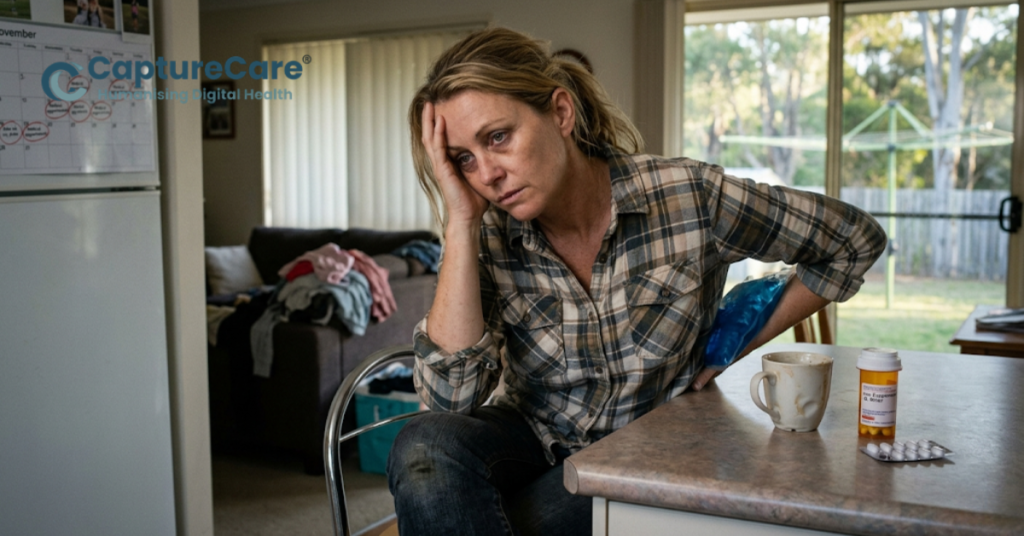
No one warns you that one of the biggest biological transitions of your life can arrive right as everything else starts to unravel. A marriage ending. A redundancy letter. Children leaving home. An ageing parent who suddenly needs more care than you can give. For many midlife women, these life changes happen at the same time their bodies are also moving through the hormonal upheaval of perimenopause.
When major stress collides with hormonal change, it does not just take an emotional toll. It can also speed up physical changes that are easy to miss. Sleep becomes more disrupted. Blood pressure starts to rise. Mood, memory, and energy shift in ways that are often blamed on circumstance rather than biology.
The link between midlife stress and women’s health during major life transitions remains one of the least explored areas of preventative care. It is also one of the clearest reasons why continuous, nurse-led monitoring matters so much during this stage of life.
When Life Upheaval and Perimenopause Arrive Together
Perimenopause, which typically begins in a woman’s mid-to-late forties, is a period of significant hormonal fluctuation. Oestrogen and progesterone levels shift unpredictably. These hormones do not only regulate the menstrual cycle. They influence mood, cardiovascular function, bone density, cognition, and sleep architecture. When they begin to decline, the effects ripple through the entire body.
Add a major life stressor on top of that, and the picture becomes considerably more complex.
Research involving 509 Australian midlife women found that menopause symptoms and major life stressors often overlapped and shaped the experience of midlife for many participants. Rather than happening separately, these transitions were unfolding at the same time, often without clinical support that addressed both together.
An earlier survey of more than 1,000 women by the Newson Health Menopause Society found that 73 per cent attributed their relationship breakdown at least in part to menopause symptoms. Emotional dysregulation, low libido, irritability, and exhaustion are not easy to separate from the stress of a deteriorating relationship. Often, the biology and the life event feed each other in ways that neither a GP nor a divorce lawyer is equipped to untangle.
The Role of Cortisol
Chronic stress triggers the release of cortisol, the body’s primary stress hormone. In small, short-term bursts, cortisol is useful. It helps you respond to pressure. But when stress is sustained over months or years, as it often is during major life transitions, elevated cortisol begins to interfere with nearly every system in the body.
Research published in the journal Menopause demonstrated that cortisol patterns shift during the menopausal transition in ways that interact with declining ovarian hormones. The result is a body under compounded pressure: the hormonal load of perimenopause, plus the physiological cost of chronic stress, running at the same time.
You can read more about how sustained stress manifests physically in our post on how life stress shows up in the body over time.
Why These Health Changes Go Unnoticed
One of the most difficult things about this period is that the symptoms are easy to misattribute. Fatigue after a divorce? Of course you’re tired. High blood pressure after a redundancy? Stress does that. Difficulty concentrating after becoming a carer for an ageing parent? That sounds reasonable.
The problem is that when these symptoms are explained away by circumstance, the underlying physiological changes go unmeasured and unmonitored. Blood pressure that begins rising during a period of sustained stress does not automatically return to normal once the stressor resolves. Inflammatory markers that climb during chronic stress can persist. Sleep disruption that begins as a response to anxiety can become a pattern that deepens metabolic risk.
The Gap Between Appointments
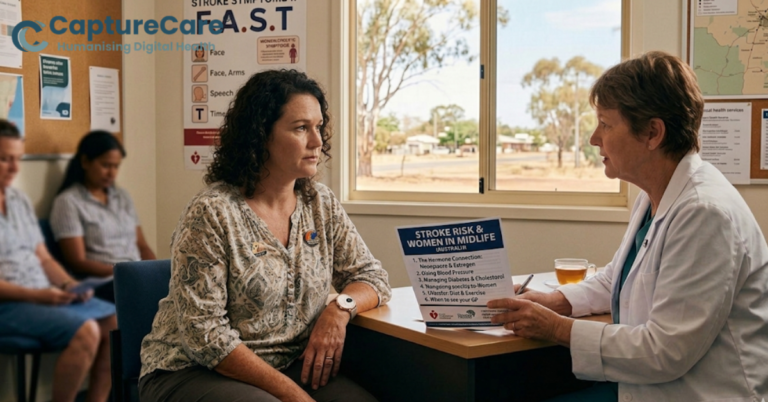
Most women in midlife see a GP only when something is clearly wrong. Annual health checks exist but are inconsistently taken up. Between appointments, a great deal can change without anyone noticing.
A CaptureCare survey of midlife Australian women found that 40 per cent reported living with prolonged stress, and 35 per cent were actively caring for children, ageing parents, or both. These are women who are often so focused on managing everyone else’s needs that their own health data is the last thing being tracked.
Jean Hailes for Women’s Health recognises that midlife women face compounding pressures that can erode their health without obvious warning signs. Yet the health system largely waits for women to present with a problem before offering meaningful support.
The result is a significant monitoring gap, one that falls precisely at the time when consistent data would be most informative.
Menopause and Relationship Breakdown
The intersection of menopause and relationship breakdown deserves particular attention. Hormonal changes affect emotional regulation, patience, and the capacity for intimacy. Relationship stress, in turn, elevates cortisol and disrupts sleep. The two reinforce each other, and without structured health monitoring, the physical consequences accumulate quietly in the background.
This is not about blame or biology as destiny. It is about recognising that a woman going through a separation in her late forties or early fifties is almost certainly also navigating significant hormonal change and deserves healthcare that acknowledges both.
What Monitoring Can Do During Life Transitions
The value of continuous health monitoring during major life transitions is not that it solves the stress. It does not. What it does is give you and your care team an accurate, ongoing picture of how your body is responding to everything happening around it.
This matters for several reasons.
Blood pressure is one of the clearest indicators of sustained stress load. It rises in response to cortisol, and in midlife women, the loss of oestrogen’s protective effects on the cardiovascular system means that what might have previously resolved on its own is now more likely to persist.
The Australian Institute of Health and Welfare identifies cardiovascular disease as the leading cause of death in Australian women, yet blood pressure is one of the most commonly under-monitored markers in women under 65.
Read more about why blood pressure monitoring for midlife women deserves more attention than it currently receives.
Sleep disruption is another area where monitoring provides real clarity. Wearable devices can distinguish between the kind of poor sleep driven by anxiety and the kind associated with hormonal change. That distinction matters for how a nurse or GP responds.
Mood and cognitive function are harder to measure but no less important. Regular check-ins with a nurse who knows your history make it possible to track changes over time rather than assessing them in a single, pressured appointment.
The Difference a Pattern Makes
A single blood pressure reading tells you one thing. A series of readings over six months tells you something entirely different. It shows whether a value is stable, trending upward, or responding to specific circumstances. That kind of longitudinal data is what makes preventative care genuinely preventative, rather than reactive.
Our nurse-led PRPM (Personal Remote Patient Monitoring) programme is built around exactly this principle. Rather than relying on occasional appointments, women receive ongoing monitoring with clinical interpretation from a dedicated nurse practitioner who understands their full picture.
The programme integrates data from Withings smart health devices, which capture metrics including blood pressure, heart rate, weight, and sleep patterns between clinical appointments. This data is reviewed by a nurse who provides plain-language summaries and flags anything that warrants further attention.
What to Watch For During a Major Life Transition
If you are currently going through a significant life change and you are in your forties or fifties, the following patterns are worth paying attention to.
- Sleep changes that persist beyond a few weeks: Occasional poor sleep is normal during stressful periods. Persistent disruption, especially waking in the early hours, is worth monitoring carefully.
- Blood pressure readings that are creeping upward: If you have home monitoring equipment, take readings regularly and keep a record. If you do not, consider adding this to your health toolkit.
- Mood changes that do not lift: Anxiety, low mood, and cognitive fog that linger well beyond the acute phase of a stressor may have a hormonal component. This is not weakness. It is biology, and it can often be addressed with appropriate support.
- Physical symptoms that appear new or unexplained: Heart palpitations, headaches, joint pain, and digestive changes can all be influenced by hormonal fluctuation and chronic stress. They deserve clinical attention, not dismissal.
The Better Health Channel provides useful plain-English resources on stress and its effects on physical health and is a good starting point for understanding what to watch for.
Perimenopause-related mental health changes are also closely connected to major life transitions. Our post on perimenopause and mental health in Australia explores this connection in more detail.
Structured Support at the Most Unstable Time
Major life transitions do not pause for perimenopause, and perimenopause does not pause for major life transitions. They arrive together, amplify each other, and create a period of significant vulnerability that the standard health system is not well designed to support.
Having a nurse who knows your baseline, understands your history, and is actively watching for change is not a luxury. During the years when everything else is shifting, it is one of the most grounding things available.
“Women going through major life changes in midlife are often carrying the weight of everything happening around them while their own bodies are going through profound change. What we offer is consistency: someone who is watching the patterns, not just the moments, and who is there to make sense of what’s happening before it becomes a crisis.” Amelia Dickison, Founder, CaptureCare
If you are navigating a significant life change alongside perimenopause or menopause, our nurse-led monitoring programme is designed for exactly this kind of moment. Join our waitlist or enquire about our pilot programme to find out how ongoing clinical support can help you stay across your health when life is at its most demanding.

The Author
Amelia Dickison
On a mission to stop the stoppable and prevent the preventable when it comes to our health and happiness
🙌 Start Your Health Journey Today
Whether you’re 40, 60 or 80, stroke doesn’t discriminate — but knowledge gives you the upper hand. The Stroke Risk Test is available right now through CaptureCare, your partner in preventative health and wellness.
💡 Share your results with your GP and start your wellness plan today. Because when it comes to stroke, the best treatment is prevention.