Chronic Pain in Midlife Women: The $48 Billion Workplace Problem No One’s Measuring
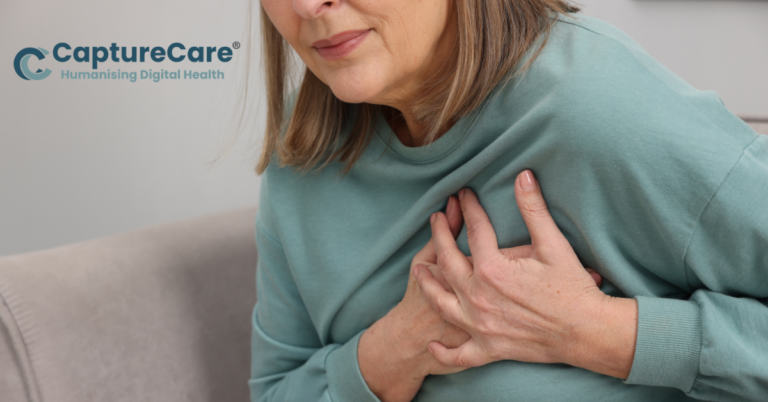
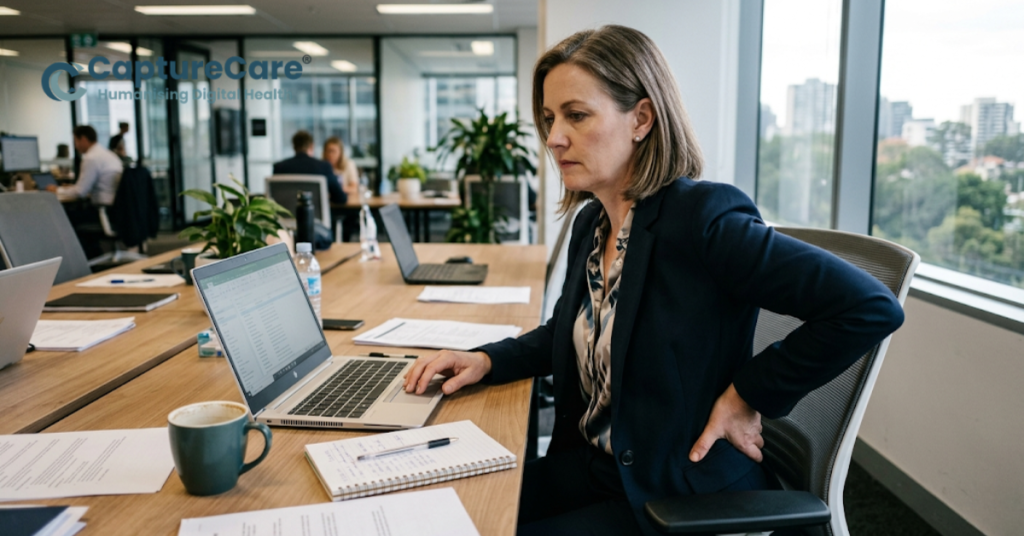
She’s been at her desk since 8am. She answered the emails, ran the meeting, and made the decision. She also took two ibuprofen before lunch, shifted in her chair seventeen times, and spent the afternoon thinking about how to get through the rest of the day without anyone noticing.
This is not a story about weakness. It’s a story that plays out, quietly, in offices and kitchens and classrooms across Australia every single day.
More than 3.6 million Australians live with chronic pain. Just over half of them are women. And the majority are of working age. Yet most conversations about workplace wellbeing skip right past this, offering a gym subsidy or a phone number for an employee assistance programme and calling it done.
Chronic pain in midlife women is a workforce crisis. It is invisible, underreported, and almost completely unmeasured. And the longer it stays that way, the more it costs, in money, in health, and in the quiet attrition of capable women who simply can’t sustain the pace anymore.
What Chronic Pain Is Actually Doing to Women at Work
The word “chronic” means lasting longer than three months. For many women, that’s being generous. Back pain, joint pain, and musculoskeletal conditions often start in the forties and become a fixture of daily life well into the sixties. According to the Australian Physiotherapy Association, chronic pain costs the Australian economy $73.2 billion each year, with $48.3 billion of that coming from lost productivity alone.
Musculoskeletal disorders, the category that includes back, neck, shoulder, and joint pain, cost a further $55.1 billion annually. A 2025 Monash University study published in JAMA Network Open projected that back pain alone will cost $638 billion in lost productivity over the coming decade. These are not abstract figures. They represent people. Mostly women.
Women aged 45 to 64 carry the highest rates of musculoskeletal pain of any group. This is not a coincidence. During perimenopause and menopause, oestrogen levels fall sharply, and oestrogen plays a significant role in protecting joints, regulating inflammation, and even modulating how pain signals are processed by the brain. When it drops, pain that was manageable can become constant. Pain that was occasional can become daily.
What makes this particularly hard is that it rarely looks dramatic from the outside. There’s no cast, no obvious injury, no clear sick day. There’s just a woman at her desk, managing.
The Hidden Cost: Presenteeism
Presenteeism means being physically present at work but not fully functional because of a health condition. It is notoriously hard to measure, which is exactly why it goes unmeasured.
| What’s happening | What it costs |
| Women show up despite pain | Productivity drops, but no sick day is recorded |
| Chronic pain is a leading driver of presenteeism | Australian employers lose an estimated $35 billion per year |
| Pain overlaps with fatigue, poor sleep, and low mood | Output and decision-making are affected across the whole day |
| No formal support exists in most workplaces | Women absorb the cost themselves, silently |
For midlife women, presenteeism is often the default. They show up, they contribute, and they quietly absorb the cost of doing so, with no formal support in place and no one measuring what it’s actually taking out of them.
Why This Keeps Getting Missed
Part of the problem is cultural. Women in midlife are extraordinarily good at managing discomfort without complaint. Decades of being told that periods are supposed to hurt, that tiredness is normal, that aches are just part of getting older, have trained many women to minimise their own symptoms. By the time pain becomes undeniable, it has often been present, and accumulating, for years.
Part of the problem is structural. Standard workplace wellness programmes were not designed with the biology of midlife women in mind. A standing desk and a meditation app are not nothing, but they are not a match for the complexity of hormonal change, sleep disruption, inflammation, and pain that many women are navigating simultaneously. If you want to understand why so many women feel fine on paper but genuinely unwell in reality, this piece on why normal results don’t always mean you feel normal is worth reading.
Part of the problem is also clinical. The 2024 National Pain Survey by Chronic Pain Australia found that cost is the single biggest barrier to accessing healthcare for people living with chronic pain. Even for women with private health cover and good incomes, the ongoing cost of physiotherapy, specialist appointments, and pain management adds up quickly. Many women simply delay or avoid care.
The Symptom Overlap Problem
Chronic pain in midlife women rarely arrives alone. When multiple symptoms are present at once, they become harder to attribute and harder to treat. A GP working within a ten-minute appointment is making decisions with a very narrow slice of information.
| Symptom | Could point to… |
| Persistent back or joint pain | Musculoskeletal condition, inflammation, oestrogen decline |
| Fatigue | Poor sleep, perimenopause, thyroid changes, anaemia |
| Disrupted sleep | Hormonal change, anxiety, chronic pain itself |
| Low mood | Perimenopause, depression, prolonged pain, stress |
| Brain fog | Hormonal fluctuation, sleep deprivation, thyroid, or all of the above |
Any one of these is worth investigating. All of them together, showing up in the same woman at the same time, are a pattern that deserves proper attention.
This is why monitoring over time matters so much. A single appointment captures a moment. It does not capture what has been building for months.
What Tracking Pain Over Time Actually Shows You
There is a significant difference between knowing you have back pain and understanding how your back pain behaves over time. Does it worsen before your period? Is it correlated with your sleep quality? Does it spike when your blood pressure is elevated, or when you’re going through a stressful period at work? Is it gradually improving, staying flat, or slowly getting worse?
Without data, these questions stay unanswered. With data, they become a story that you and your healthcare team can act on.
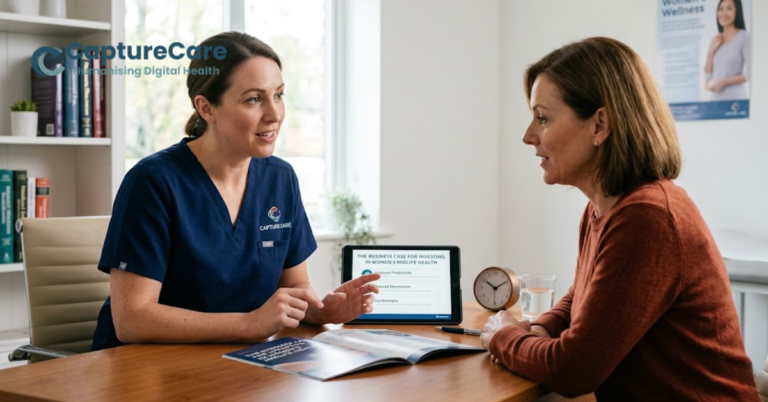
This is what CaptureCare is designed to do. The programme tracks a range of health measures, including pain levels, sleep, blood pressure, weight, mood, and energy, over time, and a dedicated nurse monitors the patterns alongside you.
You’re not left to interpret readings alone. You’re given context, plain-English summaries, and a clear picture of what’s shifting. For women who use Withings smart health devices, this data flows directly into the monitoring programme, making it easy to capture what’s happening without any extra effort.
For employers, this kind of structured monitoring is the difference between offering wellness theatre and offering something that genuinely supports the people on their team. It creates a clearer picture of how a woman’s health is trending, not in a way that violates privacy, but in a way that gives her the information she needs to make better decisions about her own care.
The conversation around presenteeism and midlife women in the workplace is slowly growing. But action is lagging behind. Employers who invest in meaningful, longitudinal health support now are not just doing the right thing. They are protecting the workforce they have worked hard to build.
What Gets Caught When Someone Is Actually Watching
Pain that is tracked over time often reveals things a one-off appointment misses entirely. The combination of metrics matters just as much as any single reading.
| What gets tracked | What it can reveal |
| Pain scores over weeks and months | Whether pain is gradually worsening, improving, or cycling with hormones |
| Sleep quality alongside pain levels | Whether poor sleep is driving pain, or pain is disrupting sleep |
| Blood pressure trends | Early signs of cardiovascular strain that often sit alongside chronic pain |
| Mood and energy patterns | Whether low mood is a pain response, a hormonal shift, or something else entirely |
| Weight changes over time | Inflammation, thyroid changes, or metabolic shifts that affect pain |
A gradual increase in pain scores alongside rising blood pressure and worsening sleep is a very different clinical picture than isolated back pain. It points toward systemic strain, hormonal change, or cardiovascular risk that deserves closer attention.
This is the core of what nurse-led monitoring provides. Not more data for its own sake, but data with someone watching and interpreting it alongside you.
What You Can Do Right Now
If you are a midlife woman carrying pain you’ve been quietly managing, there are some concrete steps worth taking now.
- Name it accurately: Describe your pain to your GP in precise terms – where it is, when it’s worst, how long it’s been present, and how it affects your day. The more specific you are, the more useful the conversation.
- Track it before your appointment: Even a simple daily note, rating pain from one to ten and noting what else was happening that day, gives your doctor far more to work with than recall alone.
- Ask about hormonal links: If you are in perimenopause or menopause, ask your GP whether hormonal change could be contributing to your pain. The AIHW notes that musculoskeletal conditions are among the most prevalent health issues for women in this life stage. It is a fair and important question.
- Push back on “it’s just part of getting older”: Chronic pain is common. It is not inevitable, and it is not untreatable. You are entitled to proper investigation and care.
- Consider what ongoing monitoring could do for you: If your symptoms are complex, overlapping, or hard to pin down, consistent tracking is often more useful than waiting for your next annual check-up.
If your employer offers a corporate wellness programme, it’s worth asking whether it includes structured health monitoring for midlife employees. If it doesn’t, that is a gap worth naming.
You Deserve More Than a Gym Membership
“When we talk about chronic pain in women, we’re not talking about a fringe issue. We’re talking about the majority of people in this country who live with pain, and most of them are sitting at desks, doing their jobs, and managing quietly. That is not a wellness problem. That is a system problem. And it starts with measuring what’s actually happening.” Amelia Dickison, Founder, CaptureCare
Chronic pain in midlife women is not invisible because it doesn’t matter. It is invisible because no one has built the infrastructure to see it clearly.
CaptureCare is a nurse-led preventative health monitoring service built specifically for midlife women. The programme tracks the metrics that matter, over time, with a dedicated nurse who knows your picture and can spot the shifts before they become crises. Whether you are managing pain, navigating perimenopause, or simply trying to understand what your body is telling you, consistent monitoring changes what is possible.
If you are ready to stop guessing and start seeing the patterns, we would love to have you join our waitlist or pilot programme.

The Author
Amelia Dickison
On a mission to stop the stoppable and prevent the preventable when it comes to our health and happiness
🙌 Start Your Health Journey Today
Whether you’re 40, 60 or 80, stroke doesn’t discriminate — but knowledge gives you the upper hand. The Stroke Risk Test is available right now through CaptureCare, your partner in preventative health and wellness.
💡 Share your results with your GP and start your wellness plan today. Because when it comes to stroke, the best treatment is prevention.