What Does Preventative Health Monitoring Actually Look Like? A Guide for Australian Women
A GP may have told you to keep an eye on your blood pressure, weight, or stress. You may have left with good intentions, only for life to take over and that advice to fade into the background.
If that sounds familiar, you are far from alone.
Many women in midlife know they should be more proactive about their health. The harder part is knowing what that actually looks like in everyday life. Beyond the occasional GP visit, what does meaningful preventative health monitoring really involve?
This article breaks it down in a clear, practical way, so you can better understand what kind of support your health may need right now.
Why Preventative Health Monitoring Matters More Than You Think
Most healthcare systems are built to treat illness, not catch problems early. For women, that gap can be significant, especially through midlife.
Many health changes do not happen all at once. They build quietly over time during the years when women are often balancing work, family, and everything else life demands. In perimenopause and menopause, shifts in hormones can affect heart health, bone strength, sleep, mood, and metabolism all at once. Because these systems are closely linked, one change can easily affect another.
The problem is that many of these shifts go unnoticed for years.
That is why preventative health monitoring matters. It is not about chasing wellness trends. It is a practical way to spot patterns earlier, understand what is changing, and take action before small issues become bigger ones.
What Most Women Are Currently Working With
The standard model of women’s preventative care in Australia typically looks something like this: an annual check-up, a blood test every year or two, and a referral if something specific comes up. If you’re symptomatic, you make an appointment. If you’re not, you wait.
This approach has real limitations. It captures snapshots. It doesn’t track trends over time. It also relies on you recognising and reporting symptoms accurately in a ten-minute consultation with a practitioner who may or may not have detailed context about your history.
Wellness apps have stepped into some of this space, offering period trackers, sleep monitors, and step counters. These tools have value. But they don’t provide clinical oversight. There’s no practitioner interpreting what the data means for your specific health picture. Trending data with no clinical context can create anxiety without clarity.
One-off appointments have the opposite problem: clinical expertise without the data. A single blood pressure reading in a clinical setting, taken while you’re running late and a little stressed, may not reflect what your body is actually doing day to day.
Research says that chronic conditions in women are often detected late and that health literacy and access to ongoing support remain key barriers to better outcomes. The gap isn’t just in funding or services. It’s in the model itself.
What many women in midlife are missing is something in between: structured, continuous monitoring with clinical interpretation. That’s what preventative remote patient monitoring (PRPM) offers.
What Preventative Remote Patient Monitoring Actually Involves
PRPM isn’t a single test or a single device. It’s an ongoing, structured framework for tracking key health metrics over time, with a clinical professional who can interpret what those metrics mean and how they’re changing.
Here’s what that typically looks like in practice:
1. A Thorough Baseline
Before anything is monitored, you need to know where you’re starting from. A comprehensive baseline assessment measures a wide range of biomarkers, from lipid panels and blood glucose to hormones, inflammation markers, and thyroid function. Some programmes also offer optional continuous glucose monitoring (CGM), which can reveal how your body responds to food, stress, and sleep in real time.
This is meaningfully different from a standard blood test. It’s not looking for what’s wrong. It’s establishing what’s normal for you, specifically, at this point in your life.
2. Continuous Metric Tracking with Medical-Grade Devices
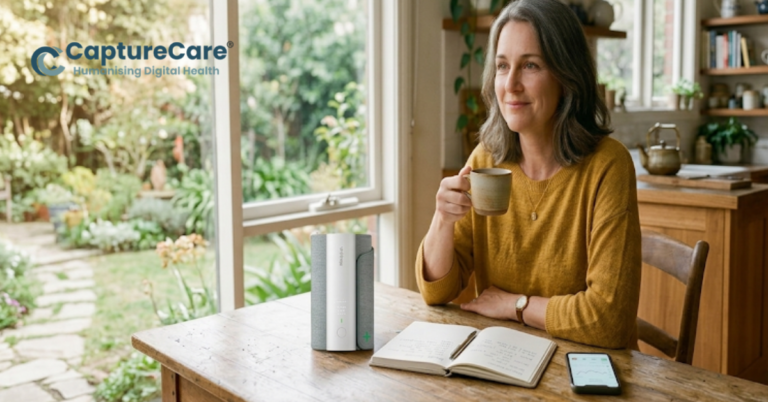
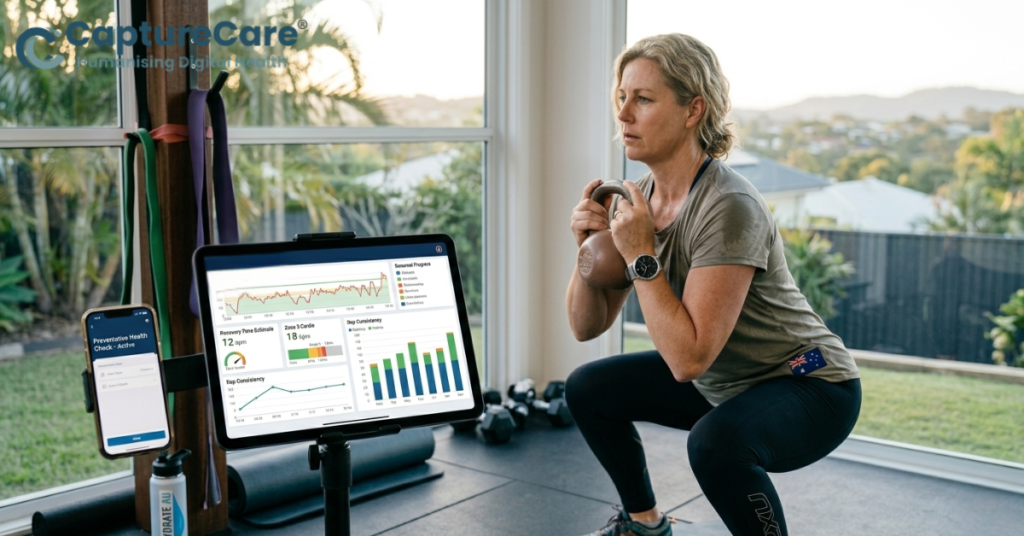
Monitoring doesn’t stop at the blood draw. Medical-grade devices track blood pressure, resting heart rate, weight, activity levels, and sleep patterns continuously. The data isn’t passive. It feeds into a clinical picture that’s reviewed regularly by a nurse who knows your history.
CaptureCare uses Withings smart health devices for this kind of continuous tracking. Withings devices are medical-grade, meaning they meet clinical accuracy standards, not just consumer wellness benchmarks. That distinction matters when the data is being used to make health decisions.
3. A Dedicated Nurse, Matched to Your Life Stage
One of the most important elements of effective monitoring is having a consistent clinical contact who understands the context of your health, not just the numbers. A nurse who is matched to your life stage, whether that’s early perimenopause, post-menopause, or navigating a chronic condition diagnosis, can interpret changes in a way that’s relevant and proportionate.
Fortnightly check-ins provide regular touchpoints, but the relationship extends beyond those conversations. Your nurse is watching your data between sessions.
4. Plain-English Health Summaries and GP-Shareable Reports
Good monitoring produces good communication. Health summaries written in plain English, without clinical jargon, help you understand what’s happening in your body. Reports that can be shared directly with your GP mean your primary care practitioner has context, not just symptoms.
This kind of information sharing closes a significant gap. Research notes that cardiovascular risk in women is frequently underestimated, partly because risk factors like elevated blood pressure or changing lipid profiles develop gradually and asymptomatically. A monitoring programme that flags early trends can prompt earlier conversations with your GP.
5. Early Alerts, Not Just Reassurance
Perhaps the most practical benefit of ongoing monitoring is the alert function. If your blood pressure begins trending upward over several weeks, or if your sleep quality deteriorates in a pattern that coincides with other symptoms, your nurse can flag it and respond before it becomes a clinical concern.
This is the difference between prevention and panic. Monitoring doesn’t mean searching for things to worry about. It means having someone watching your data alongside you, so you’re not doing it alone.
How to Think About Whether This Is Right for You
Preventative health monitoring is particularly well-suited to women who:
- Are in perimenopause or menopause and want a clearer picture of what’s happening hormonally and physiologically
- Have a family history of cardiovascular disease, type 2 diabetes, or osteoporosis
- Are managing a chronic condition and want more consistent visibility between specialist appointments
- Feel that something is “off” but have been told their results are “within normal range”
- Want to build a proactive, documented health record over time
It’s also worth thinking about what you’re currently working with. If your health monitoring currently consists of an annual check-up and a tracking app, there’s likely a meaningful gap between what you know about your health and what’s actually happening in your body.
That gap doesn’t have to stay there.
A More Connected Approach to Your Health
Preventative health monitoring isn’t about surveillance or anxiety. Done well, it’s about having clarity. It’s about replacing the “wait and see” approach with something more consistent, more clinically grounded, and more attuned to the realities of women’s health in midlife.
“Women have spent decades being told their symptoms are normal, or just stress, or just getting older,” says Amelia Dickison, founder of CaptureCare. “What we offer is a way to actually know, with data and clinical support, what’s happening and what to do about it.”
If you’re ready to move from reactive to proactive, the CaptureCare PRPM program offers nurse-led monitoring designed specifically for midlife women. You can join the waitlist or enquire about our pilot programme to find out whether it’s the right fit for where you are right now.
Because your health deserves more than a snapshot.

The Author
Amelia Dickison
On a mission to stop the stoppable and prevent the preventable when it comes to our health and happiness
🙌 Start Your Health Journey Today
Whether you’re 40, 60 or 80, stroke doesn’t discriminate — but knowledge gives you the upper hand. The Stroke Risk Test is available right now through CaptureCare, your partner in preventative health and wellness.
💡 Share your results with your GP and start your wellness plan today. Because when it comes to stroke, the best treatment is prevention.