For Every Woman Diagnosed, Four Go Undiagnosed: The Data Behind the Women’s Health Crisis
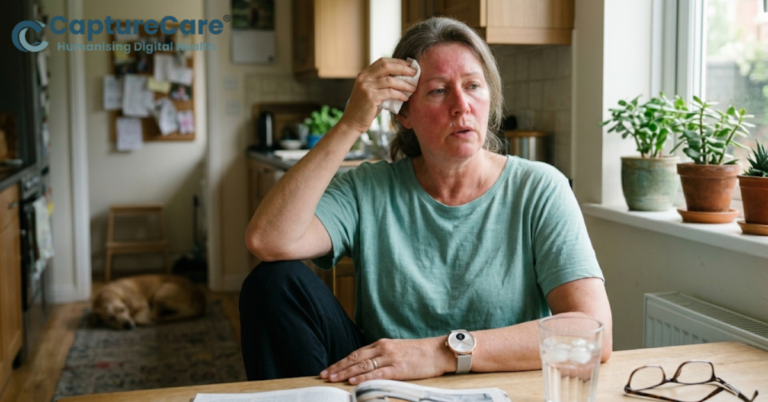
You went to your GP. You described what you were feeling. You walked away with a referral for something that turned out to be nothing, or a script that didn’t quite help, or a suggestion to “see how you go.” And the feeling persisted, that quiet sense that something isn’t right, but no one can quite put their finger on it.
This experience is not unusual. In fact, the data suggests it is deeply, systemically common for women.
According to a landmark World Economic Forum report on the global women’s health gap, for every one woman formally diagnosed with a health condition, roughly four go undiagnosed. That is not a rounding error. That is a structural failure, and it is playing out in GP waiting rooms and hospital wards across Australia every single day.
Understanding why women are misdiagnosed in Australia and what can be done about it is the first step towards demanding better. And increasingly, women are doing exactly that.
The Scale of the Problem: What the Research Tells Us
The numbers are hard to ignore. Women spend about 25% more of their lives in poor health than men, which adds up to roughly nine extra years lived with illness or disability. Much of that burden falls during midlife, when health risks begin to rise and symptoms are often easy to brush aside.
This gap starts long before a woman seeks care. Women’s health has long been underfunded and understudied, and women have also been underrepresented in early-stage clinical trials. When medical research does not fully reflect how health conditions present in women, diagnosis and treatment are more likely to miss the mark.
The Diagnosis Delay
Compared to men, women wait up to 2.5 years longer to receive a cancer diagnosis and up to 4.5 years longer for a diabetes diagnosis. For conditions that are progressive where earlier intervention changes outcomes, that delay is not a minor inconvenience. It is clinically significant.
Heart disease is perhaps the starkest example. Women presenting with a heart attack are up to seven times more likely to be misdiagnosed than men, often because their symptoms differ from the classic presentation that dominates medical training. Jaw pain, nausea, fatigue, and breathlessness can all signal a cardiac event in women, but they are still routinely dismissed or attributed to anxiety.
The Heart Foundation Australia acknowledges that heart disease remains the leading cause of death in Australian women, yet it continues to be perceived by both the public and some clinicians as a condition that primarily affects men.
Why Women Are So Often Missed
The diagnosis gap is not simply the result of individual oversights. It reflects deeper systemic issues: a research base historically built around male physiology, clinical guidelines that have been slow to account for biological sex differences, and a healthcare system where GP appointments are short and the burden of advocacy often falls on the patient.
Menopause: A Case Study in Missed Care
Nowhere is this more visible than in menopause management. A 2023 Medical Journal of Australia article examining barriers to menopause care in Australia found that GPs frequently lack both the skill and confidence to effectively manage perimenopause and menopause. Many women turn to self-help resources because they feel unsupported, and significant negative perceptions around menopausal hormone therapy (MHT) persist among both patients and some practitioners.
The result is that women navigating the hormonal transition of midlife are often left to piece together care from multiple incomplete sources. For a deeper look at what the body is actually going through during this period, the post on the health changes no one warns you about in midlife is worth reading in full.
The Symptom Attribution Problem
One of the biggest gaps in women’s healthcare is that physical symptoms are too often explained away as stress, anxiety, or simply being run down. For midlife women, that can delay proper support and make real health changes easier to miss.
Common symptoms that are often dismissed include:
- Fatigue that may be linked to hormonal shifts, poor sleep, thyroid issues, or metabolic changes.
- Palpitations that can reflect stress but may also point to cardiovascular or hormonal changes.
- Joint pain that may be connected to inflammation, menopause, or other underlying conditions.
- Mood changes that can have a physical basis, not just an emotional one.
When this happens, many women start to question themselves. They may delay going back to the doctor or stop pushing for answers.
That gap can matter. The longer symptoms are overlooked, the easier it is for manageable issues to progress.
What Monitoring and Awareness Can Change
Data does not lie. One of the most powerful things a woman can do in the absence of a healthcare system that consistently catches what it should is to build her own health baseline.
This is not about becoming your own doctor. It is about having something concrete to bring to a clinical conversation. When a GP can see that your resting heart rate has been trending upward over six months, or that your sleep patterns shifted significantly around a particular point in time, the conversation changes. You are no longer relying solely on subjective memory. You have a record.
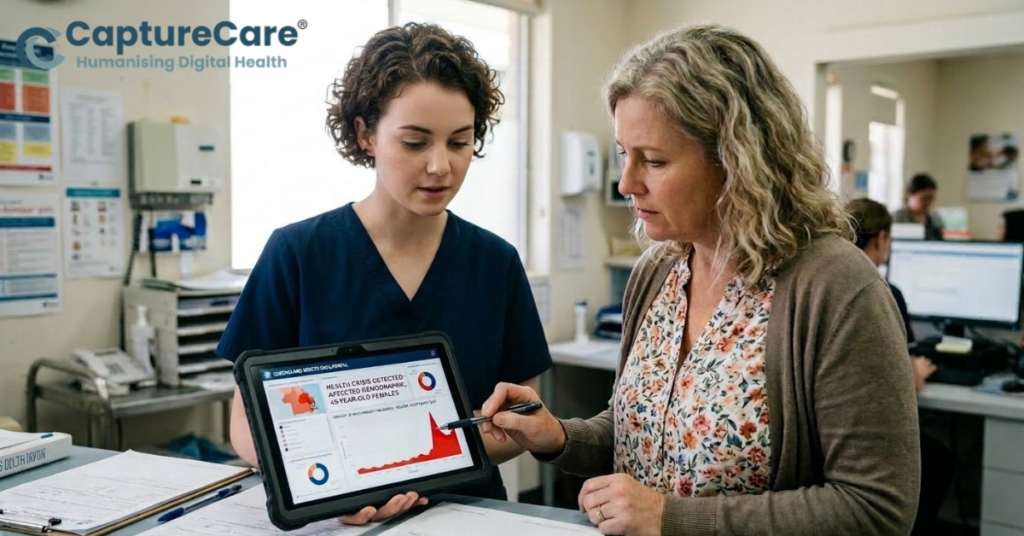
Continuous health monitoring through wearable devices and regular biomarker tracking makes this possible. CaptureCare’s programme incorporates Withings smart health devices, which track data points like heart rate, blood pressure, sleep quality, and body composition over time. This kind of longitudinal data is exactly what helps a clinician see trends rather than isolated moments.
As explored in the piece on what it means to have a nurse watching the pattern, not the moment, that distinction is especially important for women whose symptoms tend to fluctuate, accumulate gradually, or present differently from the textbook.
The Value of a Structured Health Record
The Australian Institute of Health and Welfare (AIHW) consistently highlights that women in midlife carry a higher chronic disease burden than is often recognised. Conditions including cardiovascular disease, osteoporosis, diabetes, and autoimmune disorders all have risk trajectories that shift significantly during perimenopause, a period that typically spans years, not months.
Regular monitoring through this window does not guarantee a diagnosis, but it dramatically improves the chances of catching changes early, when intervention is most effective.
Practical Steps Every Midlife Woman Can Take
You do not need to change everything at once to start looking after your health more proactively. A few focused steps can make it easier to spot changes early and have more useful conversations with your healthcare provider.
- Track your baseline: Know what is normal for you, including your usual resting heart rate, blood pressure, energy levels, and sleep patterns. When something changes, you are more likely to notice it early.
- Document your symptoms: Before your next GP appointment, write down when symptoms happen, how long they last, and what seems to trigger or relieve them. Clear details can help build a more accurate picture.
- Ask direct questions: If you have cardiovascular risk factors or feel that something is off, ask your GP specifically about the checks you may need. Do not assume the right screening will always be offered automatically.
- Seek informed support: Not every provider has the same level of experience in midlife women’s health. Finding someone who understands menopause, bone health, cardiovascular risk, and related changes can make a real difference.
- Consider structured monitoring: If you want more than a once-a-year snapshot, look into options that help track your health over time. Ongoing monitoring can make patterns easier to spot between appointments.
The goal is not to become hyper-focused on every symptom. It is to understand your body more clearly, trust what you are noticing, and act earlier when something changes. For midlife women, that kind of awareness can make care feel less reactive and far more supportive.
When to Push for More
If you have brought up a concern and still feel unheard, it is okay to ask for more support. That might mean getting a second opinion, booking another appointment, or asking for a referral to a specialist.
For many midlife women, pushing for answers is sometimes necessary. If something does not feel right, it is worth following up. You know your body best. Tools like symptom checkers and healthcare directories can also help you understand what kind of support may be available in your area.
You Deserve More Than a System That Overlooks You
The data is clear: women are misdiagnosed in Australia at rates that should concern everyone. But data, on its own, does not change outcomes. Action does.
Knowing the gap exists is the first step. Building a health record that captures your patterns over time is one of the most practical things you can do to protect yourself within an imperfect system.
Amelia Dickison, Founder, CaptureCare:
“Women in midlife deserve continuity – someone who is watching for changes over time, not just responding to a crisis. That consistent, longitudinal view is where real prevention happens.”
CaptureCare’s nurse-led health monitoring programme is designed specifically for midlife women who want a structured, evidence-informed approach to preventative health, one that works alongside, not instead of, their existing healthcare relationships. If you are ready to take a more proactive approach to your health, we invite you to join the waitlist.

The Author
Amelia Dickison
On a mission to stop the stoppable and prevent the preventable when it comes to our health and happiness
🙌 Start Your Health Journey Today
Whether you’re 40, 60 or 80, stroke doesn’t discriminate — but knowledge gives you the upper hand. The Stroke Risk Test is available right now through CaptureCare, your partner in preventative health and wellness.
💡 Share your results with your GP and start your wellness plan today. Because when it comes to stroke, the best treatment is prevention.